Troubleshooting band sawing: Design & Engineering
Understanding how to troubleshoot typical band sawing challenges can be helpful for new and experienced band saw operators alike. Although cutting issues vary due to the material characteristics, size and shape, some general guidelines are a useful reference.
Understanding how to troubleshoot typical band sawing challenges can be helpful for new and experienced band saw operators alike. Although cutting issues vary due to the material characteristics, size and shape, some general guidelines are a useful reference.
In addition to these tips, it is recommended to consult the manufacturer of your band saw machine and blades for guidance in optimizing sawing operations.
Here are common challenges, their possible causes, results if not addressed and solutions.

Teeth Stripping
Improper break-in of the blade. An improper break-in leads to chipped teeth, which shorten blade life and possibly lead to tooth strippage. Follow the proper break-in procedure from the blade supplier.
Blade speed too slow. Speed should be established based on the type of material. If the speed is set too low, the teeth can over-penetrate, which puts excessive stress on them and eventually causes them to strip. It is also important to refer to cutting recommendations from the saw machine manufacturer.
Feed pressure too high. Reduce pressure to avoid over-penetration and tooth strippage.
Tooth jammed in the cut. When this occurs, do not enter a new blade in that cut. When teeth strip, there is a good chance that remnants of the teeth are left in the cut. If a new blade is installed and then fed back into the same cut, it is likely that these remnants, which are as hard as the new teeth, will cause the new blade to strip teeth as well. It’s always best to start a new cut. Or, if you must cut at the same position, turn the material over and try coming in from the opposite side.
Poor cutting fluid application or ratio. Adjusting for the proper coolant flow and ratio is key because cutting fluid is necessary on almost all materials. It provides both cooling and lubrication to the cutting surface. Without cutting fluid, excessive heat is generated, leading to poor blade life and possible tooth strippage.
Hard material or heavy scale. Hard, scaly materials present their own problems. With proper feeds and speeds, the challenges can be overcome, but these material types do tend to be more susceptible to strippage than others.
Wrong blade pitch. Using the wrong pitch, especially too coarse a blade, typically applies too much pressure to each tooth and eventually leads to strippage. Proper tooth selection is key.
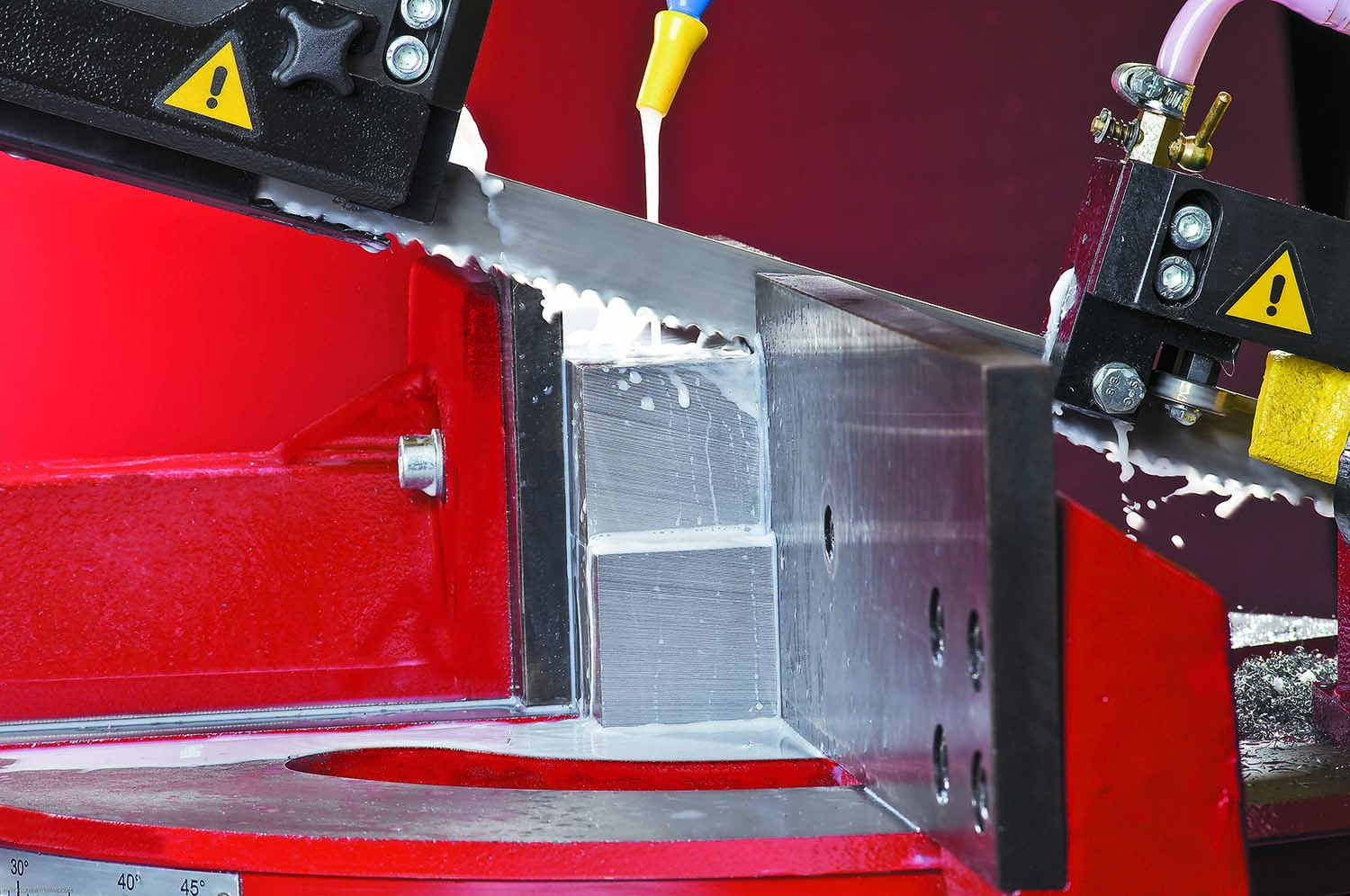
Understanding how to troubleshoot typical band sawing challenges can be helpful for new and experienced band saw operators alike. Image courtesy of L.S. Starrett” data-entity-type=”file” data-entity-uuid=”0ff81971-79e5-48fe-8649-e3f837d848d6″ height=”438″ src=”/wp-content/uploads/legacy/inline-images/0A4A0840.jpg” width=”657″ />Work moving in the vise. Tightly holding material is a must because any movement in bundled material or a single bar causes tooth breakage. Tighten vises or use nesting clamps for best results.Blade backward on the machine. Blades may not be welded with the teeth going in the correct direction for your machine. It is imperative for the back of the blade to face toward the band wheel flange and for the teeth to move in the correct direction when the machine is switched on. If this isn’t the case, it is an easy fix. Simply twist the blade inside out and reinstall it.Premature Dulling of TeethAs with teeth stripping, putting the blade backward on a machine, improperly breaking in the blade, working with hard or heavy surface scale material, having an improper cutting fluid application or ratio and running the speed or feed too high are all challenges that may lead to premature dulling of teeth. Refer to the previous section for solutions.In addition, when cutting material that tends to workharden, it is imperative for each tooth to penetrate. If it does not, workhardening can occur. For all intents and purposes, the blade only will rub across the material, causing premature dulling. Increasing feed pressure is recommended if this happens.Wear on the Back Edge of the BladeExcessive backup guide pre-load. Properly adjusted backup guides are crucial to good blade life. If positioned in such a way as to “push” the blades out of the guides, the backup guides themselves not only will wear out quickly, but the back of the blades will be damaged.Low blade tension. Low tension “bows” the blade as it travels between guide arms. This flexibility causes cracking in the back of the blade. Refer to the operator’s manual for guidelines.Excessive feed rate or pressure. Reduce the feed rate or pressure to avoid wear on the back edge of the blades and other issues.Damaged or worn backup guides. Replace backup guides when they are damaged or worn. Guides should be in good condition as this is where the back of the blade rides when cutting. They should be smooth, without grooves or cracks, and adjusted properly.Guide arms spaced too far apart. Similar to low tension, if guide arms are too far apart, the blade tends to bow. This leads to premature cracking. Adjust the guide arms closer to the work.Blade rubbing band wheel flanges. Adjust blade tracking. It is extremely important for the back of the blade not to ride on the band wheel flange. The blade should be adjusted as close as possible but should not hit the flange. If the blade rubs the flange, this creates a sharp edge on the back and causes breakage.Blade Breakage: A Straight Break Indicates FatigueBand tension too high. Refer to the operator’s manual, and reduce band tension. Most production machines require 28,000 to 32,000 psi of blade tension. This always should be checked with a blade tension gauge and kept within the manufacturer’s preferred range.Wheel diameter too small for the blade width. Use a narrower blade because the blade will break if not supported properly, and it usually is not a straight break.Versatix MP bimetal band saw blades feature triple-tempered high-speed M42 cobalt steel teeth with an alloy steel backing strip. The blade has a patented tooth design that dissipates stress during cutting for less tooth breakage and longer blade life. Image courtesy of L.S. Starrett
Worn or chipped guide. Replace a worn or damaged guide to prevent a break, which likely would be uneven. A worn or chipped guide can cause a straight break but typically gouges the back of the blade and causes crooked breaks.
Blade rubbing the wheel flange or having side guides that are too tight. This results in blade breakage. Proper adjustment is necessary.
Inaccurate Cut
Guide arms too far apart. Adjust the guide arms closer to the material.
Blade worn out. Replace the blade when it is at the end of its life cycle because it typically will dull out and no longer cut or perhaps result in crooked cuts. Also, it is possible that the blade will break due to backer fatigue.
Excessive or inadequate feeding. Check the cutting recommendations. Excessive feed rates can cause breakage in certain circumstances. However, this is not common.
Guides worn or loose. Tighten or replace the guides. If they are not adjusted properly, premature blade failure and breakage are possible.
Band Leading in the Cut
Overfeeding. Check the cutting recommendations. As noted previously, blade speed, feed pressure and feed rate all are required to be in balance for the particular material being cut. If any or all of these are not near recommended specifications, then crooked cutting likely will result.
Low band tension. Refer to the operator’s manual. Without adequate blade tension, beam strength will be insufficient to hold the blade straight, resulting in crooked cuts.
Tooth set damaged. Check the hardness of the material. Damaged tooth sets can occur with tracking issues, as well as guide issues. If either problem is present, then damage to the set (the side of the teeth) is very possible and will result in crooked cuts.
Guide arms loose or too far apart. Adjust the guides and/or guide arms. Similar to low band tension, guides that are spread too far apart can cause crooked cuts because the blade is not supported well enough to keep cutting straight.
Review the print ads from this magazine to continue
This quick advertiser review unlocks the rest of the article and keeps the full-screen reader focused on the ads instead of the page chrome.
Advertisers included in this article experience
Print placements connected to this article
Komaprecision.Com / 1-800-249-5662
Fanuc America
A CRX cobot is connected to a machine with Fanuc controls, and software simplifies robot integration and startup. ROTARY TABLES UNLOCK YOUR POTENTIAL TODAY! 20 MAY 2023.
Fanuc America A CRX cobot is connected to a machine with Fanuc controls, and software simplifies robot integration and startup. KOMAPRECISION.COM / 1-800-249-5662 ROTARY TABLES UNLOCK YOUR POTENTIAL TODAY! 20 MAY 2023
Visit Komaprecision.Com / 1-800-249-5662 View this placement in the issue recordPrint ads from this magazine
A CRX cobot is connected to a machine with Fanuc controls, and software simplifies robot integration and startup. ROTARY TABLES UNLOCK YOUR POTENTIAL TODAY! 20 MAY 2023.
Fanuc America A CRX cobot is connected to a machine with Fanuc controls, and software simplifies robot integration and startup. KOMAPRECISION.COM / 1-800-249-5662 ROTARY TABLES UNLOCK YOUR POTENTIAL TODAY! 20 MAY 2023
Continue reading
May 2023
Chip Welding
Worn, misadjusted or missing chip brush. Replace or adjust the chip brush. While it is not technically responsible for chip welding, if a brush is not installed correctly or is inoperative, it may allow chips to load up in the gullets, which can increase heat and lead to chip welding.
Improper or lack of coolant. Check the coolant flow and fluid type. As stated previously, coolant is important for both cooling and lubricating. If coolant is mixed incorrectly or the wrong type (neither cooling nor lubricating) is present, it can lead to excessive heat and chip welding.
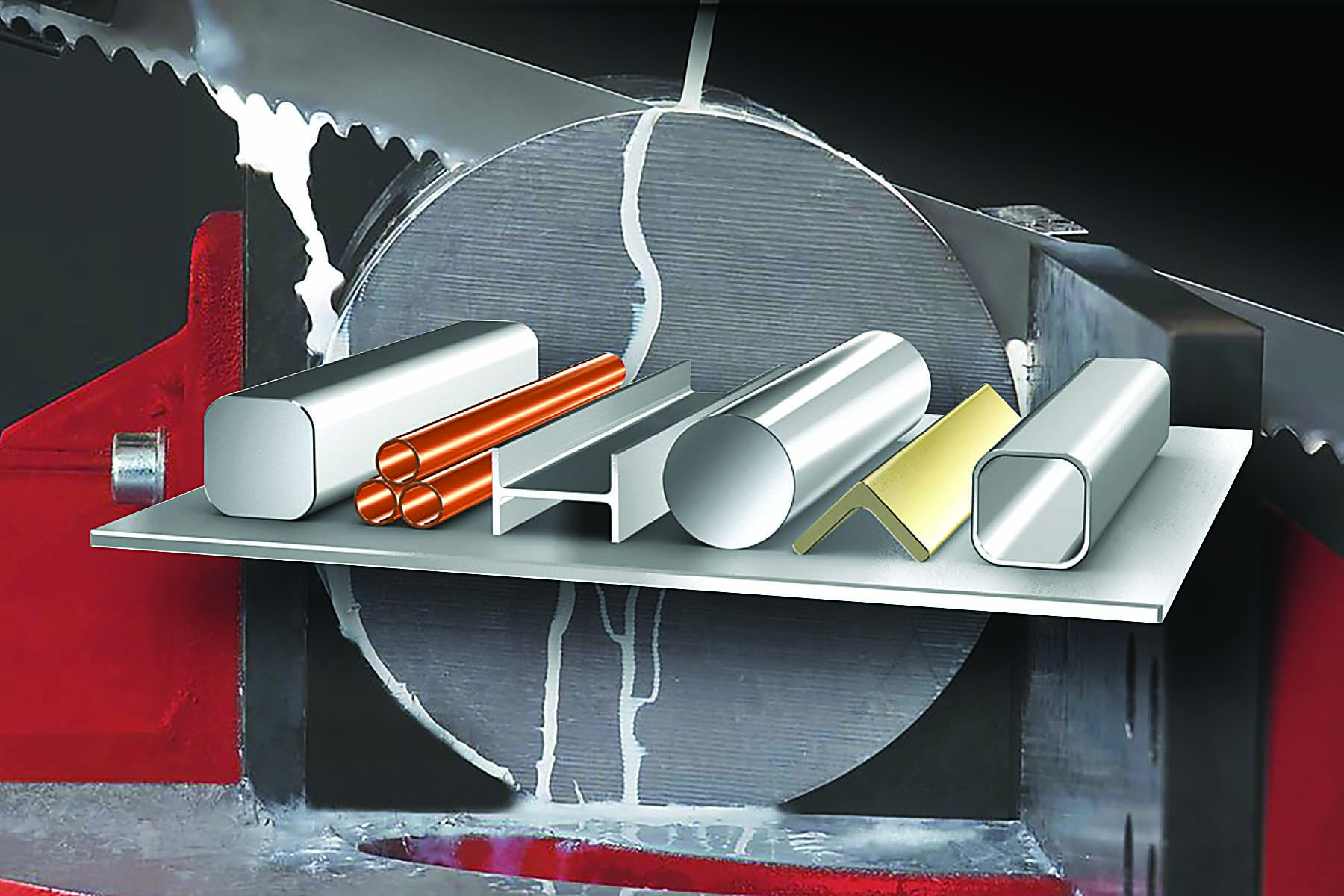
Intenss bimetal band saw blades offer general-purpose metal sawing of a wide range of materials and shapes. Featuring a patented process called bimetal unique technology, which provides 170% more weld contact with teeth, Intenss blades exhibit superior resistance to tooth strippage, significantly reducing fracture and breakage and enabling exceptionally long blade life. Image courtesy of L.S. Starrett
Excessive feed or speed. Check the cutting recommendations. Both factors can cause chip welding due to heat buildup.
Teeth Fracture: Fractures on the Back of Teeth Indicate Work Moving in the Vise
Material moved in the vise. Inspect and adjust the vise, and use nesting clamps. If the material being cut is not held tightly and it is allowed to spin or vibrate, tooth breakage (fracture) due to it hitting the back of the blade usually results.
Irregular Break: This Indicates Material Movement
Indexing while the blade is in work. Adjust the indexing sequence. It is imperative that the machine is indexing correctly. If not, it can push the material forward while the blade is either down or not high enough, breaking the teeth.
Saw head falls into work while neutral. Check the hydraulic cylinder. Always make sure the head on a horizontal saw is not leaking down and that the blade clears the material. Horizontal saws have one or two hydraulic cylinders that control the up and down motions. It is more typical than you might think for older saws to develop cylinder issues, which cause the head to leak down and contact the material, resulting in damage.
Rough Cut: Washboard Surface, Vibration and/or Chatter
Dull or damaged teeth. Install a new blade. Once teeth are damaged, their clearances and angles will be different, causing what will range from a mild washboard to a significant washboard cut.
Incorrect feed or speed. Refer to the cutting recommendations. As noted previously, proper feeds and speeds are necessary not only for blade life and sawing production but for the surface quality of the piece being cut. Running a blade at too slow a speed will result in teeth with loaded chips, allowing the teeth to “walk.” Too fast a feed rate will cause teeth to load, producing a similar outcome.
Blade not supported properly. Adjust or tighten the guide arms. Loose ones enable the blade to move back and forth, causing it to search for a straight cut.
Low blade tension. Refer to the operator’s manual. Low blade tension permits the blade to “walk.” Tension always should be set to the machine manufacturer’s recommendations, and a blade tension gauge always should be used.
Incorrect tooth pitch. Use proper tooth selection. Like incorrect feed and speed, an incorrect tooth pitch can lead to the gullets loading with chips, allowing the teeth to wander.
Wear Lines and Loss of Set
Blade riding up into the saw guides. Check for worn or missing backup guides, and adjust or replace as necessary. Wear lines, or grooves, usually are caused by bad side guides. Whether the guides are broken or worn, they can cut wear lines into the sides of blades. If a blade is riding up into the guides, this typically indicates a bad or possibly missing backup guide. It can be so bad that the teeth ride up into the side guides, causing excessive wear and crooked cuts.
Side guides too tight. Properly adjust them. Most side guides are zero clearance, meaning they should be up against the blade in a snug manner. It is possible to over-tighten, which leads to wear on the sides of blades.
Teeth riding on the band wheel surface. Adjust the tracking, or replace the wheel. As noted before, tracking is very important for good blade life. When properly tracked, the back of the blade rides close to the band saw wheel flange but not against it. In addition, the teeth should be off the wheel itself to prevent the wheel from flattening the tooth set.
Wrong blade width for the machine. Refer to the operator’s manual.
Chips being carried back into the cut. Replace or adjust the chip brush. Refer to my previous comments about it. In this scenario, the brush possibly but unlikely will cause grooves in the blades.
Insufficient coolant flow. Adjust it. Without sufficient coolant, heat becomes a factor and can lead to scoring of the blade by the guides.
Twisted Blade
Blade binding in the cut. Adjust the feed, or use a heavy set blade. A blade binding in a cut is typically an issue with the material being sawed. Materials with high internal stresses tend to pinch the blade as it travels through the material. The only solutions to this are to use a wedge of some sort or move to a blade with a heavier set. This allows a wider kerf and gives the blade more room before the material closes in on it.
Work loose in the vise. Adjust the vise. See my previous comments about this challenge.
Guide arms spread too far apart. Adjust them closer to the material. Without proper blade tension, the blade will bow and may twist, causing breakage and crooked cuts.