

Machine Technology: Alternatives to hand-feeding machines
More lathe purchasers are choosing automated material handling options, according to the February 2017 Machine Technology column by Bill Leventon.
To stay competitive, a growing number of parts manufacturers are opting to automatically feed their turning machines.
In recent years, for example, Charlotte, N.C.-based Okuma America Corp. has seen the number of lathes it sells with some type of automated material-feeding system go from 10 percent of the total to more than 30 percent, according to Jeff Estes, director of Okuma’s Partners in THINC, a supplier group that seeks to solve machining problems and boost productivity.
“I tell people that if you buy a lathe with a bar feeder, you are probably looking at $20,000 to $30,000 for the total package,” Estes said. But this investment “will pay for itself real quick.”
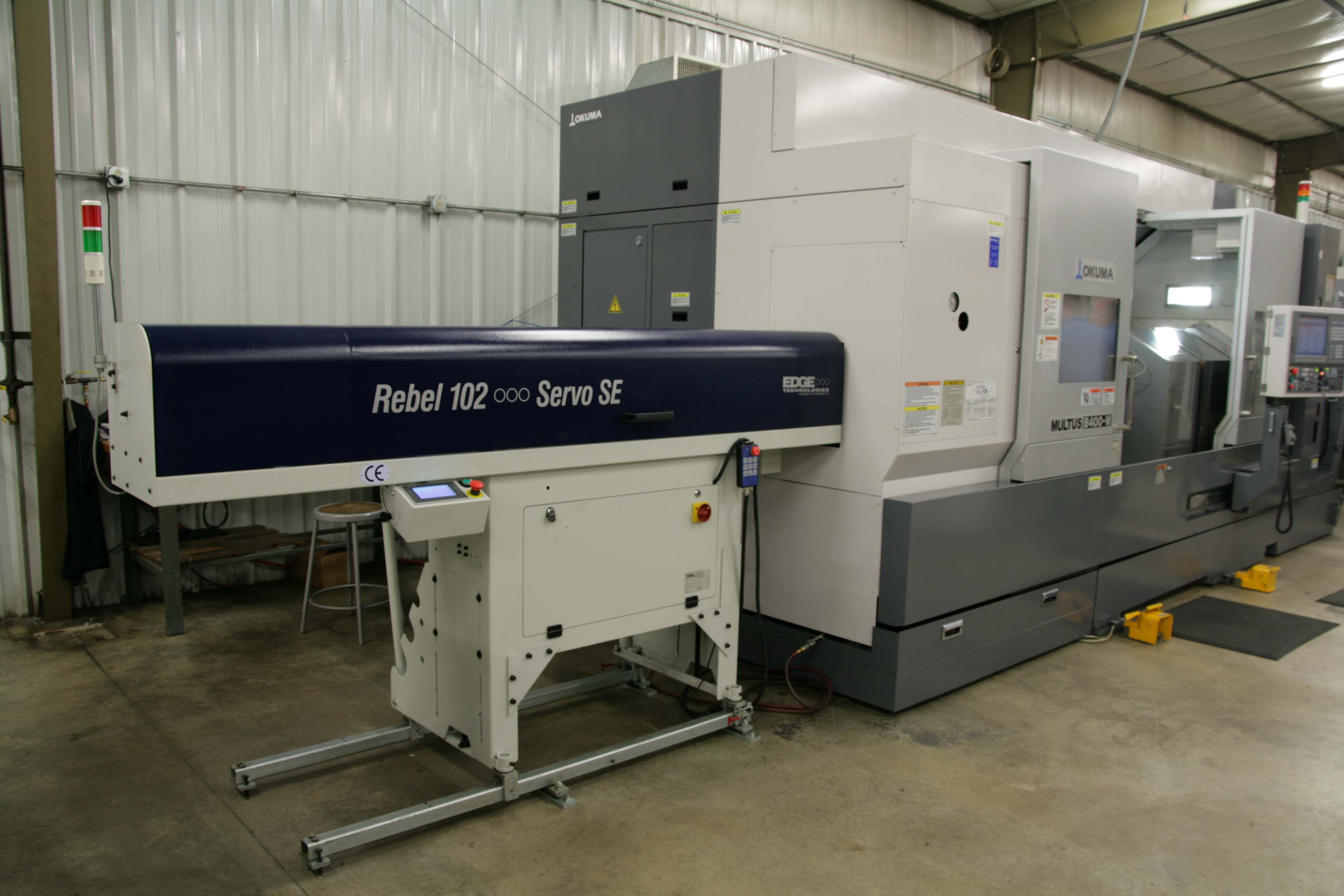
Okuma’s Multus B-400W turning center is paired with an Edge Technologies bar feeder.
Image courtesy of Okuma America.
How? The automatic bar feeder “isn’t going to leave after a 12-hour shift,” Estes noted. Instead, it can continue to operate unattended, feeding material into the machine tool for an additional 2 to 4 hours, depending on the part.
And when the plant is occupied, automatic feeding systems allow manufacturers to make better use of a valuable asset: their machinists. In traditional two- or three-machine work cells, a machinist would be placed in the middle of the machines. “There’s nothing wrong with having a qualified machinist there,” Estes said. “But where do you find these people anymore?”
So manufacturers are turning to automation to fill the skills gap, freeing up their trained personnel for machine setup and monitoring. “Now a person can monitor four or five machines that are being automatically fed, so you can spread the talent that you do find over more machines,” Estes said.
In the U.S., Estes noted, hundreds of thousands of bar feeders are helping machines run efficiently and effectively. Already proven and reliable, bar-feeder technology is being improved to simplify setup and product changeovers.
Review the print ads from this magazine to continue
This quick advertiser review unlocks the rest of the article and keeps the full-screen reader focused on the ads instead of the page chrome.
Advertisers included in this article experience
Print placements connected to this article
Toolflo
Your Threading Specialist!
CHASERSAPI Threading chasers! • Buttress, WW, NPT, Rounds... Superior coatings! Combination Bar FLO-LOCK Turning ,Threading and Facing ON-EDGE All-in-one! LAYDOWN Thousands of new items added to our new Threading Catalog! State of the art coatings! Pressed, ground and raised chip breakers! THREADMILLING Indexible and solid threadmills!
Your Threading Specialist! CHASERSAPI Threading chasers! • Buttress, WW, NPT, Rounds... Superior coatings! Combination Bar FLO-LOCK Turning ,Threading and Facing ON-EDGE All-in-one! LAYDOWN
Visit Toolflo View this placement in the issue recordPrint ads from this magazine
CHASERSAPI Threading chasers! • Buttress, WW, NPT, Rounds... Superior coatings! Combination Bar FLO-LOCK Turning ,Threading and Facing ON-EDGE All-in-one! LAYDOWN Thousands of new items added to our new Threading Catalog! State of the art coatings! Pressed, ground and raised chip breakers! THREADMILLING Indexible and solid threadmills!
Your Threading Specialist! CHASERSAPI Threading chasers! • Buttress, WW, NPT, Rounds... Superior coatings! Combination Bar FLO-LOCK Turning ,Threading and Facing ON-EDGE All-in-one! LAYDOWN
Continue reading
February 2017
On the downside, however, the movement of large metal bars on the plant floor requires forklifts and wide aisles. In addition, the bar feeders themselves can be quite large and consume valuable floor space. A feeder for 12′ bars, for example, is approximately 14′ long.
Therefore, some automation-minded manufacturers are rejecting bar feeders in favor of systems that load sawed metal slugs into their machines. “In many cases, you can put two slug-feeding machines in the space taken up by one bar feeder,” Estes said. “So if floor space is critical, slug loading is a good way to increase your capacity in the same footprint.”
Some slug loaders feed slugs through the machine’s “front door” while also catching finished parts and placing them on an out-feed conveyor. Front-door slug loaders are becoming more popular because many people prefer to cut their stock beforehand instead of inside the machine, said Dennis Toellner, CEO of Toellner Systems Inc., Milwaukee, which makes automated slug loaders for CNC machines. According to Toellner, these systems typically load slugs in 7 to 9 seconds and don’t add part-off time to machining time.
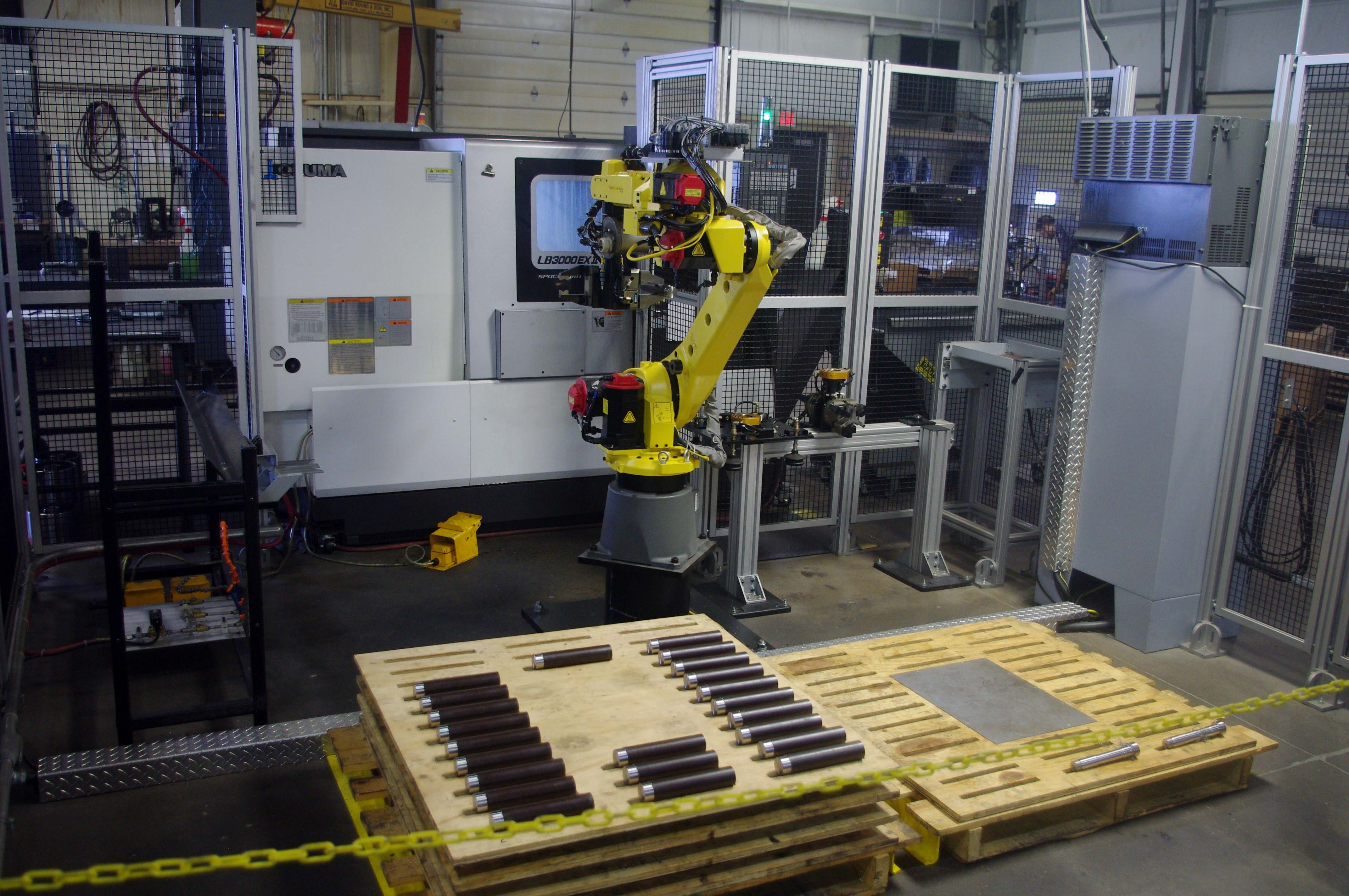
A robot loads slugs into an Okuma LB-3000EX lathe. Image courtesy of Okuma America.
Another slug-loader option is an automated pick-and-place system that employs a simple robot to load and unload the slugs. Estes pointed out that these systems are more flexible than front-door slug loaders, thanks in part to the robot’s end effectors, which can adapt to different part sizes and configurations.
A slug-loading robot can be placed next to a machine or overhead as part of a gantry-type configuration, which takes up less floor space.
According to Toellner, slugging is often the choice for machining big parts that would require relatively long, heavy bars. However, though they may be difficult to handle, bars can be fed directly into a machine while slug users must either purchase precut raw material or pay someone to saw slugs in-house. In addition, Estes noted, slug loaders are more expensive than bar feeders—and the robotic type are significantly more.
But whether the choice is a bar feeder or slug loader, he said, “your machine will be utilized more, and your machinists will be more productive.”
Related


 MFGAxis Discussion
Be part of the shop-floor conversation
Like, save, or comment on this CTE story.
MFGAxis Discussion
Be part of the shop-floor conversation
Like, save, or comment on this CTE story.


MFGAxis Discussion