Coolant management best practices
Back-end fluid filtration and recycling systems extend tool life and lower coolant costs.
Metalworking operations looking to strengthen their bottom lines may want to explore ways to get the most service out of cutting tools.
How effectively a parts manufacturer manages cutting tools can impact profit margins, especially during times of challenging market conditions, such as when material costs are high, interest rates are rising or there’s a recession. Companies that maximize tool life position themselves for more profitable operations over the long run. One key to tool longevity is maintaining best practices for coolant management.
Although purchasing high-quality cutting tools is an important first step to maximize tool life, it’s not the only consideration. Coolant purity also plays a major role in overall tool life.
By preventing tools from exceeding critical temperature ranges during machining, coolant performs a pivotal function. However, cutting fluids are subject to deterioration over time as they become contaminated with tramp oils, metal fines and bacteria. If coolant deteriorates to the point where its lubricity becomes ineffective, tools dull prematurely, break frequently and fail to meet part tolerances for surface finish and size.
Further, as coolant breaks down, it damages not only machine tools but pumps, sumps and even electronic components. Machine parts and interiors become vulnerable to rust and corrosion, equipment surfaces suffer from abrasion, and tramp oil mist causes mechanical failures and prematurely clogs air filters.
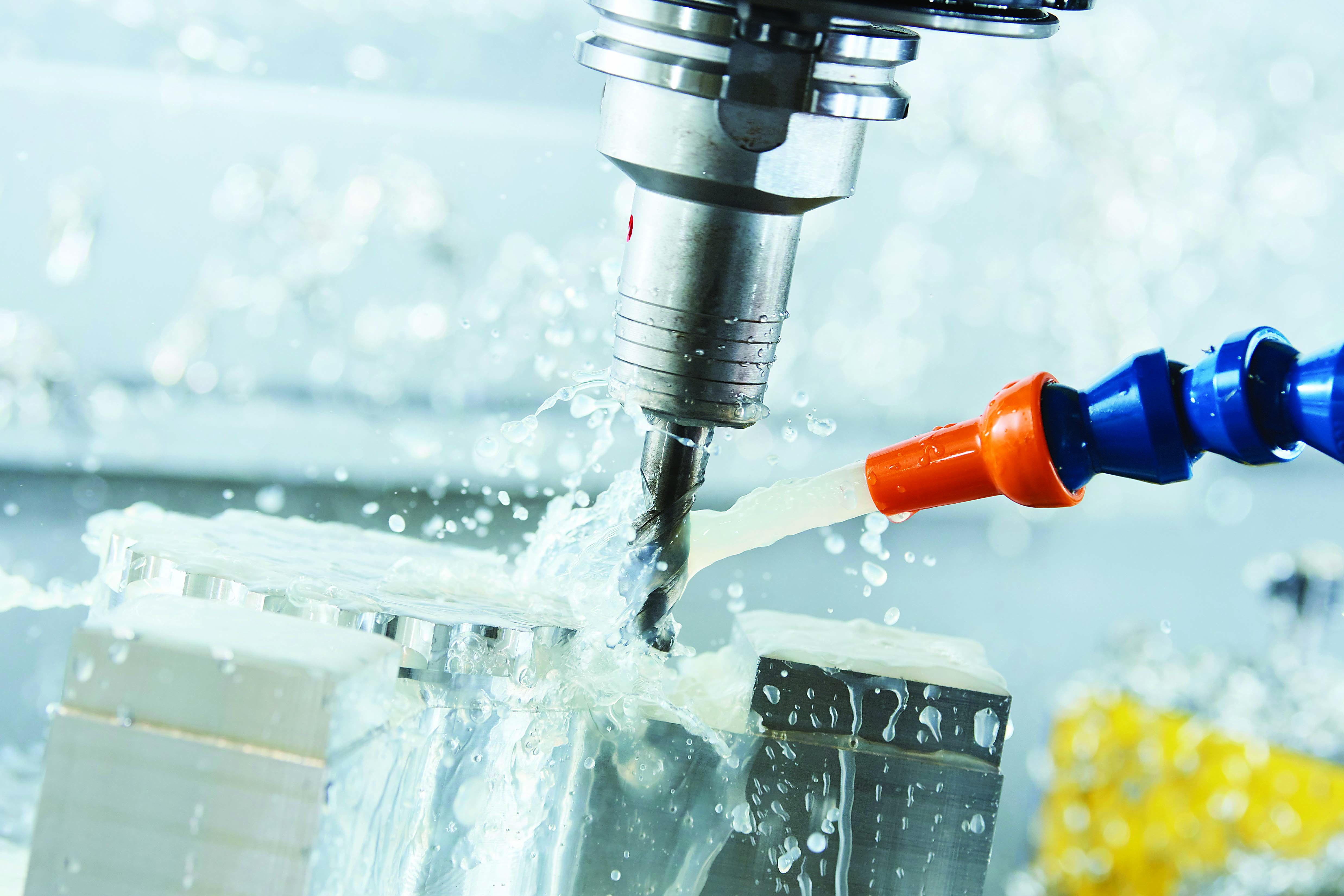
Keeping coolant clean through automated coolant recycling systems has been shown to extend tool life by up to 25% or more. Image courtesy of Prab
Automated Coolant Recycling
Continuously monitoring coolant to ensure that it meets the manufacturer’s recommended concentration level is the most important parameter for extending tool and coolant life. However, testing coolant, adjusting coolant concentration levels and treating contaminated coolant with biocides requires time and attention that could be allocated to activities that add value to parts.
Coolant recycling equipment automates the management of coolant quality by separating solids from liquids and removing free-floating and mechanically dispersed contaminants, including tramp oils and bacteria. These systems also automatically adjust fluid concentration for fluid recovery.
Clean, recycled coolant reduces sump maintenance, improves part quality and prolongs tool life. Case studies have shown that tool life can be extended by up to 25% with effective coolant recycling equipment. For example, a manufacturer of metal aerospace components installed a Prab Guardian coolant recycling system at its facility in the Pacific Northwest. The plant used Fuchs Ecocool water-soluble coolant with a total sump capacity of 16,277 L (4,300 gal.). When the manufacturer began automating the filtration of its cutting fluid through the centralized coolant recycling system, average tool life at the facility increased dramatically:
Drills — 209%
Turning tools — 78%
Forming tools — 66%
Boring tools — 47%
Review the print ads from this magazine to continue
This quick advertiser review unlocks the rest of the article and keeps the full-screen reader focused on the ads instead of the page chrome.
Advertisers included in this article experience
Print placements connected to this article
Ctemedia
Land More Leads
Enroll in a CTE Prospect Report plan and get LEADS delivered right to your INBOX! Pair it with Print: Run a half-page or larger ad in our May issue and a Box ad on our website to receive a weekly CTE Prospect Report during the month of May. Contact your CTE sales team for details! Scott Beller Marc Condon Dave Jones East Central/West Central.
Land More Leads Enroll in a CTE Prospect Report plan and get LEADS delivered right to your INBOX! Pair it with Print: Run a half-page or larger ad in our May issue and a Box ad on our website to receive a weekly CTE Prospect Report during the month of May. Contact your CTE sales team for details! Scott Beller Marc Condon Dave Jones East Central/West Central 847-714-0183 847-714-0170 708-442-5633
Visit Ctemedia View this placement in the issue recordPrint ads from this magazine
Enroll in a CTE Prospect Report plan and get LEADS delivered right to your INBOX! Pair it with Print: Run a half-page or larger ad in our May issue and a Box ad on our website to receive a weekly CTE Prospect Report during the month of May. Contact your CTE sales team for details! Scott Beller Marc Condon Dave Jones East Central/West Central.
Land More Leads Enroll in a CTE Prospect Report plan and get LEADS delivered right to your INBOX! Pair it with Print: Run a half-page or larger ad in our May issue and a Box ad on our website to receive a weekly CTE Prospect Report during the month of May. Contact your CTE sales team for details! Scott Beller Marc Condon Dave Jones East Central/West Central 847-714-0183 847-714-0170 708-442-5633
Continue reading
March 2020
Reamers — 26%
The aerospace manufacturer realized additional machining benefits. Surface finish improved by 27%, and tool resharpening costs were cut in half. Machine downtime also decreased by 50%.
Advantages of automated fluid recycling extend beyond tools. Coolant filtration and recycling systems significantly reduce fluid purchase costs and lower hazardous waste disposal costs. These systems are shown to extend coolant two to five times compared with typical change-out periods. Automated systems also eliminate unfortunate byproducts of dirty coolant, such as foul odors and dermatitis.
Equipment Overview
Presented here are eight common types of fluid recycling and filtration equipment.
1. Centralized coolant recycling systems remove tramp oils and suspended solids from contaminated coolant, control bacteria and adjust fluid concentration for fluid recovery.
2. Standard and magnetic paper bed filters can extend tool life by an average of 27%, improve surface finishes and prolong coolant life by removing solids and other debris from free-flowing industrial process liquids.
3. Magnetic separators employ high-intensity ferrite or rare earth magnets in a fully energized, rotating drum to continuously remove ferrous particles from the flow of liquid, which can reduce machine downtime by up to 50%.
4. Drum-type scraper separators extend tool life and provide cleaner surface finishes through high-quality separation of aluminum, nonferrous and composite materials.
5. Solid bowl centrifuges prolong coolant and tool life and help impart fine surface finishes by providing high-performance liquid and solid separation for all types of particles, including metallic, ferrous, nonferrous and nonmetallic solids.
6. Vacuum filtration systems extend tool life by eliminating the high sludge volume produced in machining centers and grinders.
7. Candle filters prolong tool life by removing fine particulates from spent oil in honing, EDMing and tungsten-carbide tool and steel ball grinding applications.
8. Tramp oil separators automatically remove free-floating and mechanically dispersed tramp oils, bacteria, slime and inverted emulsions from machine sumps, central systems and wash tanks.
Back-end equipment solutions enable plants and shops to take control of coolant management and maximize the service life of tools. Unfortunately, shop managers sometimes reject investments in back-end improvements because of leeriness about equipment acquisition costs or because back-end equipment doesn’t translate into a direct expansion of production capabilities. But managers need to keep in mind that taking a proactive approach to operational improvements helps reduce financial strains during challenging market conditions. Investing in capital equipment that lowers costs sets the foundation for a more sustainable long-term growth strategy.