With carbide inserts, the choices are hard and tough
Toolmaker expertise can help shops find the right balance for optimal productivity.
At first blush, hardness and toughness may seem like interchangeable concepts, but they exist at opposite ends of a continuum that defines indexable insert and solid cutting tool performance, particularly when it comes to carbide inserts. Hard inserts offer greater wear resistance for enhanced performance and tool life in hot cutting environments than somewhat softer inserts do, yet tough inserts can withstand impacts and stressors to achieve high feed rates and DOCs.
For any given application, there is an optimal balance of hardness and toughness — and toolmakers have worked diligently to establish metallurgical principles and provide a range of tools that can meet the diverse needs of part manufacturers.
Hardness represents wear resistance, which translates to the ability of a tool to withstand heat during metalcutting. The Rockwell A scale measures the hardness of tungsten carbide, though some specifications translate HRA values to the more familiar HRC scale used to measure the hardness of steel and other alloys. The temperature resistance that correlates with hardness plays a huge role in cutting tool behavior and selection.
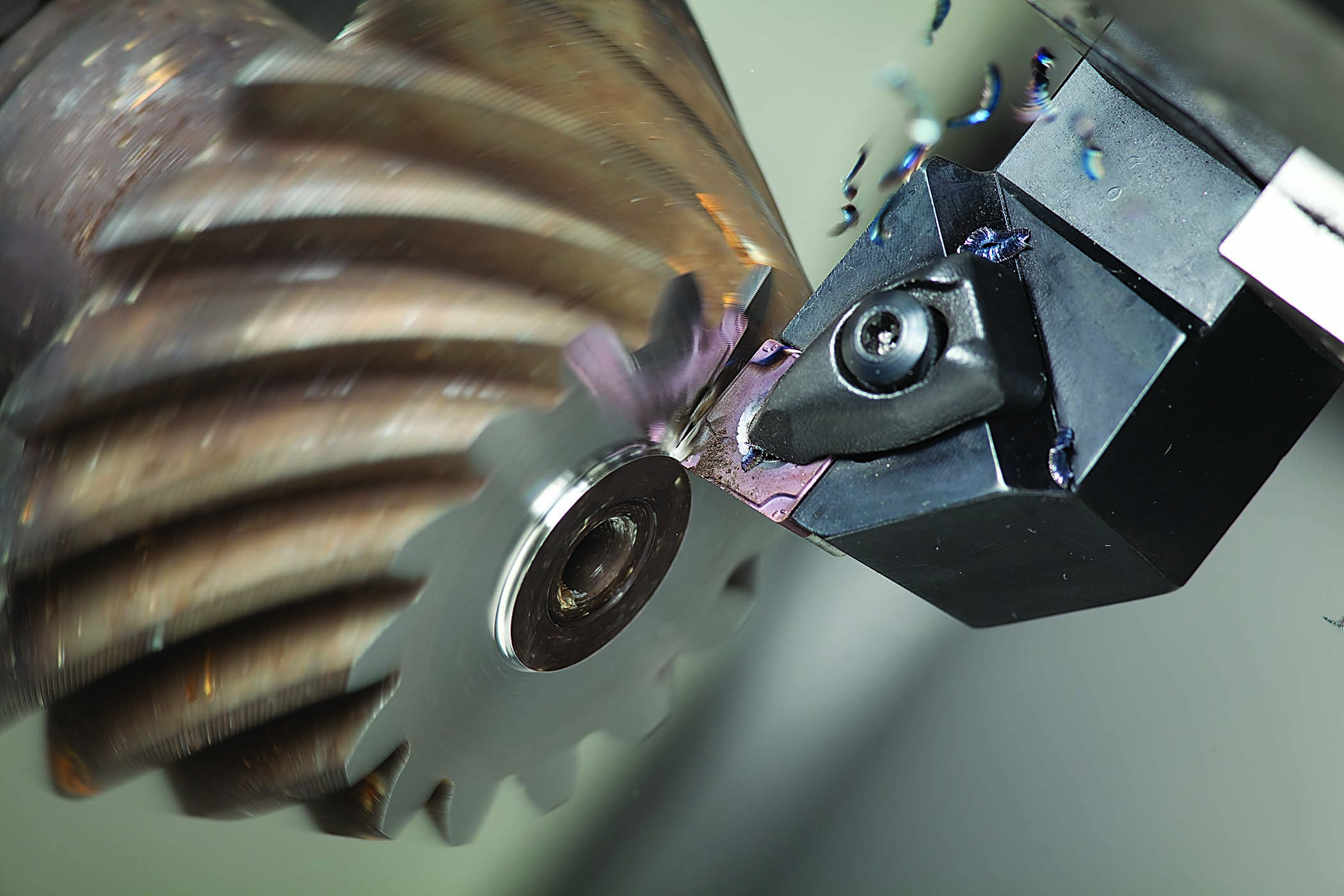
Toughness represents tool resistance to pressure and impact, which is required when performing interrupted cutting. Image courtesy of Seco Tools
In the cutting zone, temperatures can rise above 760° C (1,400° F). Hard carbide withstands and dissipates those high temperature levels and therefore handles the high heat generated in continuous cutting. High hardness levels can make metal brittle, however, which explains why heat-resistant carbide tools tend to chip in situations that produce large amounts of pressure or vibration.
Tough Enough?
At the other end of the continuum, toughness represents pressure and impact resistance, which correlate with the ability of a tool to withstand high feed rates, heavy DOCs and the repetitive impacts associated with interrupted cutting. But in exchange for durability, tough carbide becomes vulnerable to heat, making tough carbide less than ideal for high-speed, continuous cutting.
Both attributes tie directly to the primary elements that make up carbide: tungsten, carbon and cobalt. Tungsten promotes hardness and toughness while carbon boosts hardness, and the combination of the two yields tungsten-carbide molecules. Meanwhile, cobalt, which has a lower melting point than tungsten and carbon, contributes to toughness and intensifies the performance characteristics of other elements. In tungsten carbide, cobalt serves as a binder, essentially glue that holds carbide grains together.
Grain size also can determine the level of hardness and toughness. Hard carbide grades have smaller grains, and tough grades have larger ones. Hard grades need less cobalt binding to hold their grains together, which promotes better heat resistance for longer tool life during continuous cutting than with softer grades. Tough grades include more cobalt binding, which gives carbide grains better adherence to help a tool handle pressure and vibration with less heat resistance. Midway between hard and tough, cutting tools made of general-purpose carbide grades can deal with slightly interrupted cuts and offer considerable but not extreme wear resistance.
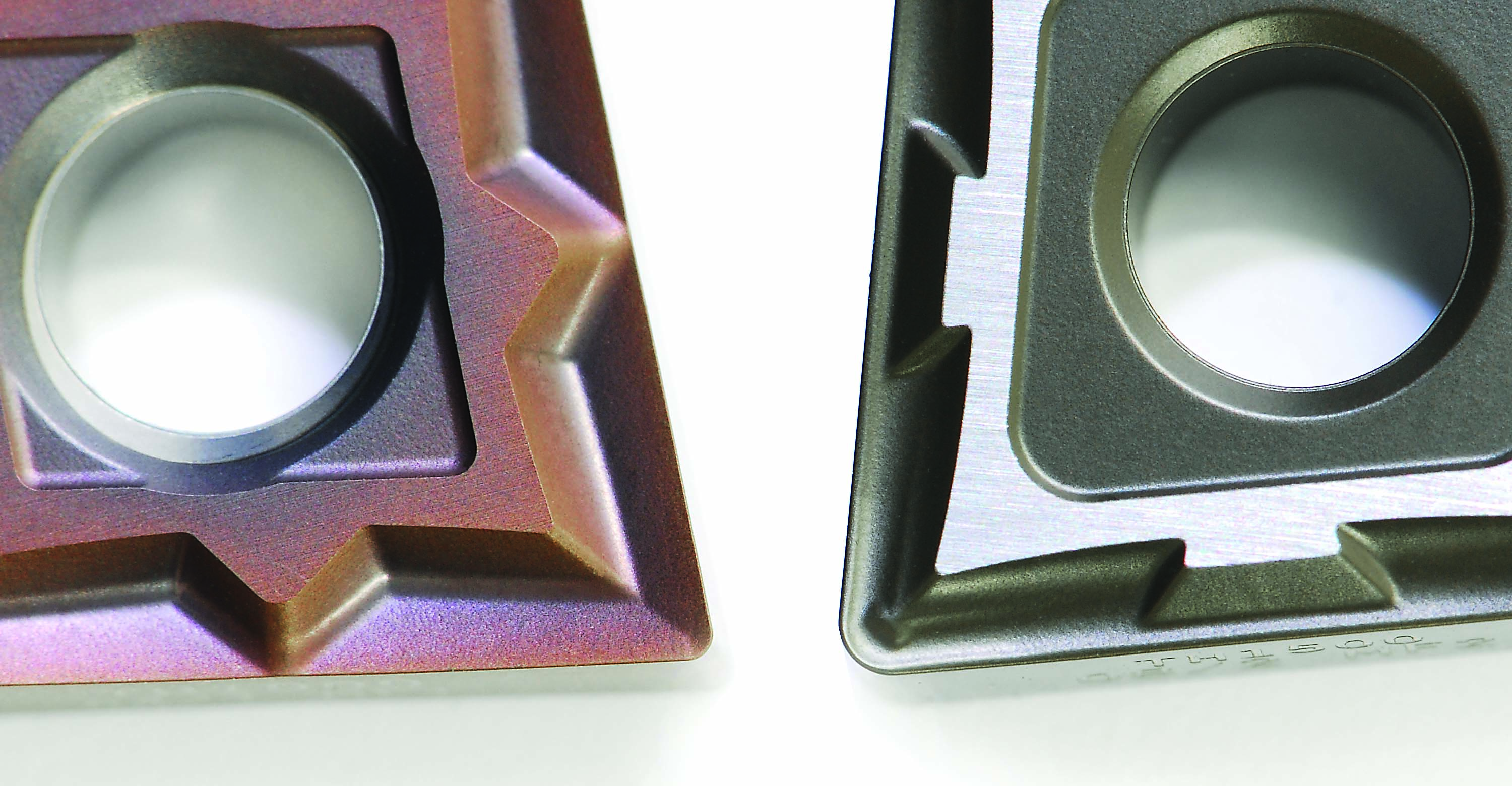
Carbide insert performance improvements often focus on two areas: the addition of superalloys or other enhanced materials to cobalt binding and the production and deposition of enhanced coatings to increase wear resistance. Image courtesy of Seco Tools
Review the print ads from this magazine to continue
This quick advertiser review unlocks the rest of the article and keeps the full-screen reader focused on the ads instead of the page chrome.
Advertisers included in this article experience
Print placements connected to this article
Nachiamerica
RE-Think Your
Carbide Oil Hole Drills with Nachi’s Aqua REVO Drill Unique patented design for coolant directed at the cutting edge Conventional Aqua REVO Keep your drill cooler while drilling ~ Allowing you to extend tool life. REVO lutionizing Drilling Area with low cooling effect Area with high cooling effect.
RE-Think Your Carbide Oil Hole Drills with Nachi’s Aqua REVO Drill Unique patented design for coolant directed at the cutting edge Conventional Aqua REVO Keep your drill cooler while drilling ~ Allowing you to extend tool life. REVO lutionizing
Visit Nachiamerica View this placement in the issue recordPrint ads from this magazine
Carbide Oil Hole Drills with Nachi’s Aqua REVO Drill Unique patented design for coolant directed at the cutting edge Conventional Aqua REVO Keep your drill cooler while drilling ~ Allowing you to extend tool life. REVO lutionizing Drilling Area with low cooling effect Area with high cooling effect.
RE-Think Your Carbide Oil Hole Drills with Nachi’s Aqua REVO Drill Unique patented design for coolant directed at the cutting edge Conventional Aqua REVO Keep your drill cooler while drilling ~ Allowing you to extend tool life. REVO lutionizing
Continue reading
May 2020
No Magic Grade
The current state of metallurgy means that no magic alloy offers extreme hardness and extreme toughness. Cutting tool performance improvements often focus on two areas: the addition of superalloys or other enhanced materials to cobalt binding and the production and deposition of enhanced coatings to increase wear resistance.
Material development also sparks cutting tool innovation. Workpieces can have powder metals, carbon-fiber-reinforced plastics and stacked and layered materials with fiber directionality that varies from batch to batch. When industries create materials to reduce surface-against-surface wear in medical implants or produce lightweight options for aerospace manufacturing, for instance, cutting tool manufacturers must respond with products that optimize the machining of these new materials. In some cases, existing tools effectively cut these materials. In other cases, the development of new tool technology is required.
Shops that experiment with cutting tools only to experience shorter-than-expected tool life can examine tool behavior to help find and correct the causes of failure. For example, inserts that develop large craters in continuous cutting applications show a lack of wear resistance and indicate the need for a harder substrate or a wear-resistant coating.
Conversely, if a hard grade fractures in a continuous cut, wear analysis should show the need for a tougher tool instead. In these instances of tool fracture or breakage, shops also should evaluate toolholder condition, along with machine tool stability and part setup.
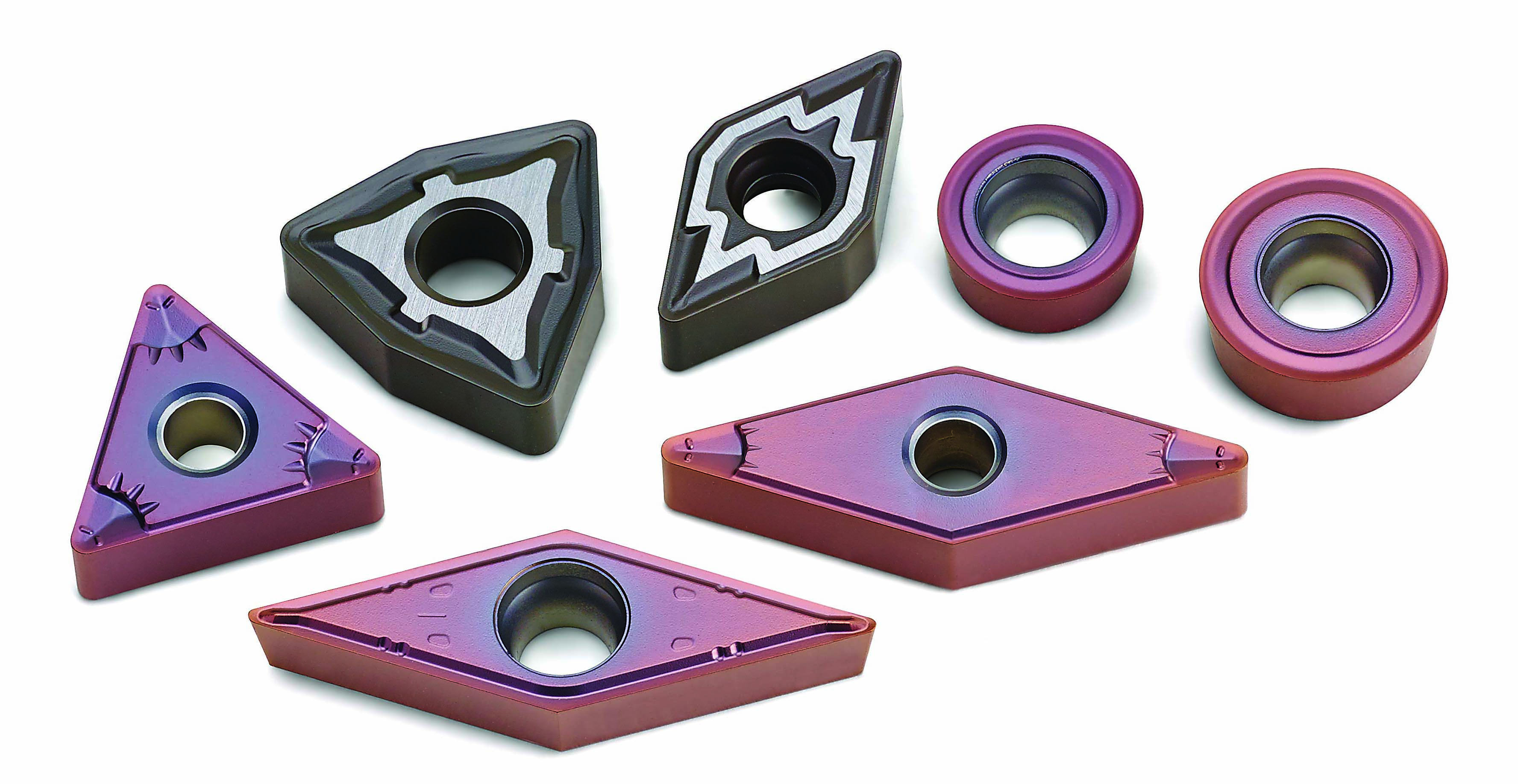
Seco Tools has increased the application range of wear-resistant TH1000 and TH1500 turning insert grades with additional positive and negative geometries, chipbreakers and nose radius sizes. Image courtesy of Seco Tools
With increased focus on hard-part turning, shops must decide as well whether to machine before or after a material reaches its hardened state, plus they have to select cutting tools that match the hardness of their workpiece materials. In a “green” state, many materials test at half the hardness they demonstrate after hardening, with obvious effects on tool selection, life and behavior.
Additionally, casehardened and through-hardened materials present two very different hardness scenarios. Casehardening creates a hard surface with potentially softer material underneath it while through hardening produces a uniformly hardened workpiece. In these cases, DOC plays a vital role in tool selection because it determines whether a task requires an insert that can cut harder or softer material.
Cutting tool manufacturers strive to help customers succeed with innovative tools and thorough support for informed tool selection. Successful toolmakers will continue to develop grades, geometries and coatings that effectively handle new workpiece materials and to add performance options for existing materials. Shops that want to ensure they make the right choices between hardness and toughness can benefit from toolmaker expertise to optimize the productivity of their cutting applications.