
KBC Tools & Machinery celebrates 60 years of ‘keeping North America working’
KBC Tools & Machinery celebrates 60 years of ‘keeping North America working’
In 2025, KBC Tools and Machinery is celebrating its 60-year anniversary. The six-decade legacy that began when Karel Bass started the ball rolling with a determination to "sell the best tooling at the best prices."
In 2025, KBC Tools and Machinery is celebrating its 60-year anniversary. The six-decade legacy began when Karel Bass "started the ball rolling with a determination to sell the best tooling at the best prices."
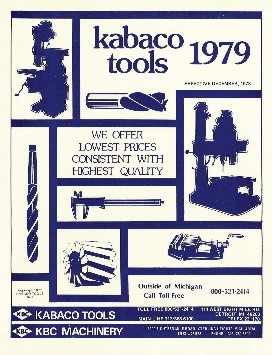
Then known as Kabaco Tools, the company started out in a 1,000-square-foot warehouse on 8 Mile Road in Detroit, Michigan. Today, the company supplies North America from six branches in the U.S. and Canada. It distributes more than 100,000 industrial SKU's from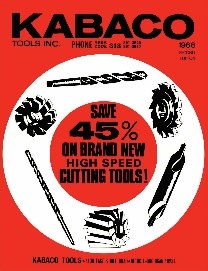 more than 600 world-class manufacturers, and the company says it is still "going strong 60 years later and keeping North America working one tool at a time."
In celebration, the company compiled a list of "fun facts" that compare the metalworking industry from 1965 when KBC started to where we are now in 2025, highlighting the evolution and milestones over six decades:
1. Machines Then vs. Now
- 1965: The Bridgeport milling machine was a staple in every shop, operated manually.
- 2025: CNC machines dominate the industry, capable of running 24/7 with minimal human intervention, but clients still love their manual milling machines.
2. Workforce Evolution
- 1965: The metalworking industry was predominantly male-dominated, with women comprising less than 5% of the workforce.
- 2025: Women make up over 30% of the workforce, and companies like KBC Tools & Machinery proudly lead the way as women-owned businesses.
3. Precision Advancements
- 1965: Tolerances of ±0.001 inches were considered precise.
- 2025: Modern machining allows for tolerances as tight as ±0.0001 inches, driven by advancements in technology and materials.
4. Tooling Technology
• 1965: High-speed steel (HSS) tools were the go-to for most cutting tasks.
• 2025: Carbide, ceramic, and even diamond-coated tools are standard, offering far superior performance and longevity, while HSS is still a standard.
5. Manufacturing Speed
- 1965: A single part might take hours or even days to produce, depending on complexity.
- 2025: Additive manufacturing (3D printing) and CNC machines can produce complex parts in a matter of minutes, directly from a digital file.
6. Safety Standards
 1965: Safety gear was minimal—think goggles and maybe gloves. Heck, who even used the seatbelt in their car?
- 2025: Full personal protective equipment (PPE), including advanced sensors and monitoring systems, ensures workers' safety. Better safe than sorry.
7. Material Science
• 1965: Steel and aluminum were the primary materials in use.
• 2025: Titanium, carbon fiber, and advanced composites are commonly used, offering superior strength-to-weight ratios.
8. Environmental Impact
- 1965: Waste disposal was not heavily regulated, and environmental impact was often an afterthought.
- 2025: The industry is committed to sustainability, with recycling programs and eco-friendly lubricants like Anchorlube.
9. Data-Driven Manufacturing
- 1965: Machine settings and adjustments were based on operator experience and manual calculations, and any data available was hand written into a paper log book.
- 2025: Real-time data analytics from SPC enabled measuring tools, CNC equipment and AI-driven systems optimize every aspect of production, from material usage to machine performance.
10. Global Connectivity
- 1965: Communication was limited to phone calls, faxes, telex, and in-person meetings.
- 2025: Global teams collaborate in real-time through digital platforms, with remote monitoring and control of machines from anywhere in the world.
11. Education & Training
- 1965: Apprenticeships and hands-on learning were the primary methods of training.
- 2025: Virtual reality (VR) and online simulations allow machinists to train in a risk-free, immersive environment before stepping onto the shop floor. Are hologram trainers on the shop floor far behind?
12. Industry 4.0
- 1965: The concept of automation was in its infancy, with basic NC (Numerical Control) machines. Can you remember computer programs driven by boxes of punch cards?
- 2025: Industry 4.0 is fully integrated, with smart factories, IoT-connected devices, and digital twins for real-time production optimization.
13. Quality Control
- 1965: Quality checks were manual, with inspectors using micrometers and calipers.
- 2025: Automated, non-contact measurement systems like laser scanners and CMMs (Coordinate Measuring Machines) ensure precision with zero human error, while manual inspection methods using digital micrometers and calipers are now equipped with SPC output. Who can even read a vernier caliper that is under 55 years old?
14. Cutting Fluids
- 1965: Standard cutting oils were messy and often harmful to the environment.
- 2025: Modern cutting fluids like Anchorlube are biodegradable, non-toxic, and much more efficient at reducing heat and friction.
15. Industry Perception
- 1965: Metalworking was viewed as a gritty, blue-collar job with limited growth opportunities.
- 2025: The industry is seen as high-tech and innovative, offering exciting career paths in robotics, engineering, and advanced manufacturing.
These fun facts showcase how the metalworking industry has transformed dramatically over the past 60 years, embracing technology, diversity, and sustainability while continuing to innovate and grow, the company says.
KBC Tools & Machinery says it has also come a long way since 1965, with a greatly expanded and technically updated offering of products for the modern machine shop. "Whether you are running a manual or CNC facility or doing any type of MRO work for industry, KBC has what you need, from HSS drill bits and end mills to indexable cutting tools, from manual machines to CNC equipment," the release stated.
The company would like to hear about its customer's jouney, askin, "How far have you come since 1965? What advances has your facility made over the past 10, 20, 30 ... 60 years? Let us know, we'd love to hear from you."