



Understanding coatings and how they lower machining costs
This article provides basic information about the coatings and processes used to coat cutting tools, dies, wear parts and other components. HSS, carbide, tool steels and stainless steels are among the most commonly coated materials.
This article provides basic information about the coatings and processes used to coat cutting tools, dies, wear parts and other components. HSS, carbide, tool steels and stainless steels are among the most commonly coated materials.
Physical and Chemical Vapor Deposition
Physical vapor deposition describes a family of coating processes. The most common of these processes are evaporation (typically using cathodic arc or electron beam sources) and sputtering (using magnetic enhanced sources, aka magnetrons, or cylindrical or hollow cathode sources).
PVD processes occur in a vacuum, typically at a working pressure of 10-2 to 10-4 mbar. They generally involve bombarding the substrate to be coated with energetic, positively charged ions during the coating process. In addition, reactive gases, such as nitrogen, acetylene or oxygen, may be introduced into the vacuum chamber during metal deposition. These gases create various compound coating compositions. The result is a very strong bond between the coating and tool substrate.
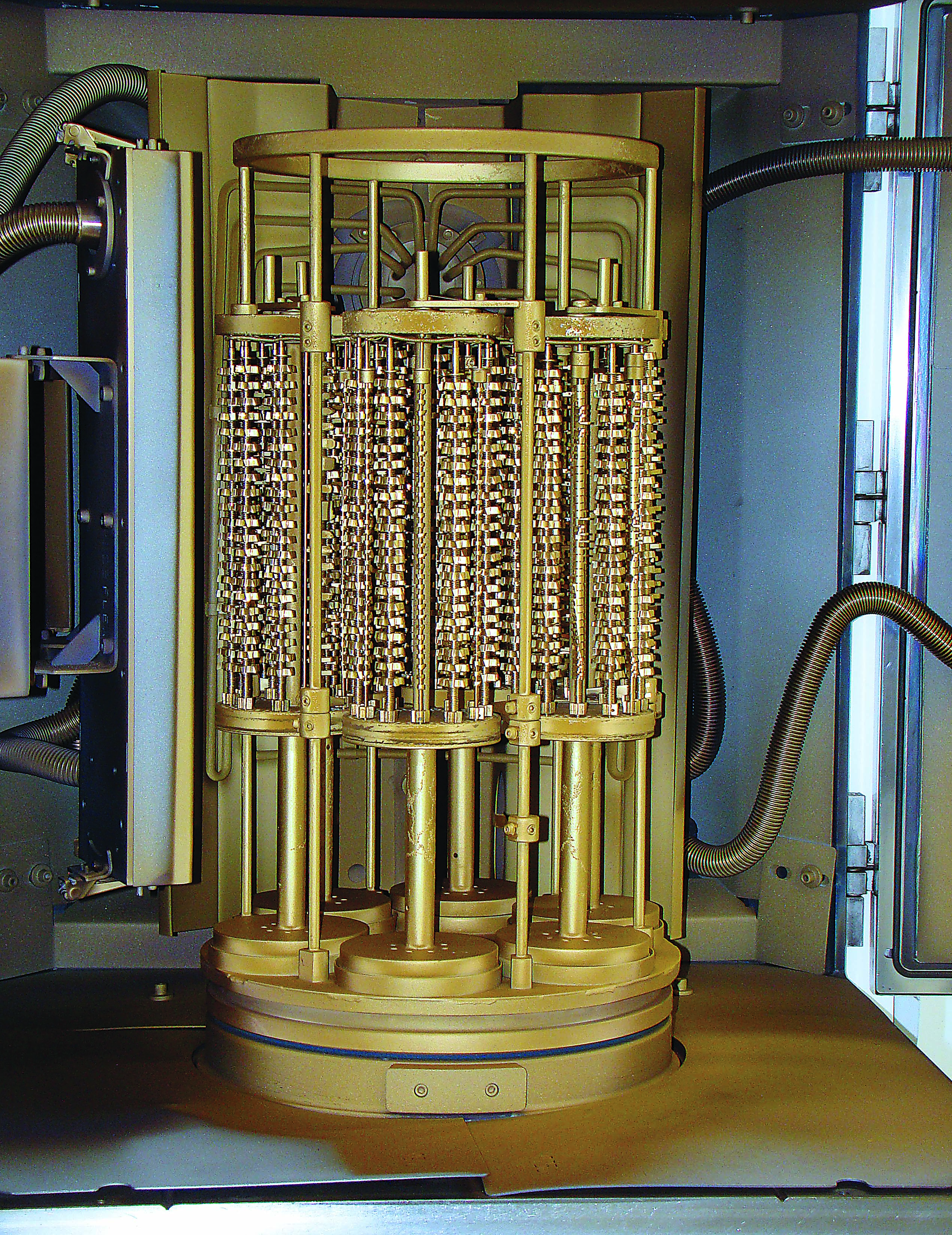
Image by Alan Richter.
The applications for PVD coatings are constantly expanding. That said, they can be separated into two broad categories: functional and decorative coatings.
Functional PVD coatings are engineered to improve the life and overall performance of a tool or component, thereby reducing the per-part manufacturing cost. An example of a functional PVD coating is TiN on an HSS endmill.
Decorative PVD coatings are deposited to improve the appearance of a part and provide wear resistance. These coatings improve both form and function. An example of a decorative PVD coating is the deposition of a zirconium-based film onto a stainless steel door handle. The resultant brass-colored coating provides better resistance to wear and tarnishing than real brass.
Chemical vapor deposition is an atmosphere-controlled process conducted at about 1,925° F (1,052° C) in a CVD reactor. During this process, thin film coatings form as the result of reactions between various gaseous phases and the heated surface of substrates in the CVD reactor. As different gases are transported through the reactor, distinct coating layers form on the tooling substrate. For example, TiN forms from the following chemical reaction:
TiCl4 + N2 + H2 1,000° C (1,832° F) → TiN + 4 HCl + H2
TiC forms as the result of the following chemical reaction:
TiCl4 + CH4 + H2 1,030° C (1,886° F) → TiC + 4 HCl + H2
The final product of these reactions is a hard, wear-resistant coating that bonds in a chemical and metallurgical manner to the substrate. CVD coatings provide excellent resistance to wear and galling.
Rationale for Coatings
When using PVD or CVD coatings in a tooling application, the primary motivation is simple: to lower manufacturing costs. Users consistently experience longer tool life while also being able to operate at increased speeds and feeds. The savings calculation is easy:
Reduced downtime for preventive maintenance and to change tools
+ increased production rates
+ decreased tooling costs due to increased tool life
= significant, tangible savings.
The savings generated by the use of coatings go right to the bottom line.
Coatings should have some variation in their properties to augment their performance in specific applications. However, two main properties are fundamental to all coatings: high microhardness and lubricity (low coefficient of friction).
The average relative microhardness of PVD and CVD coatings exceed the hardness of carbide. This high hardness gives cutting tools, forming tools and wear components excellent protection against abrasive wear.
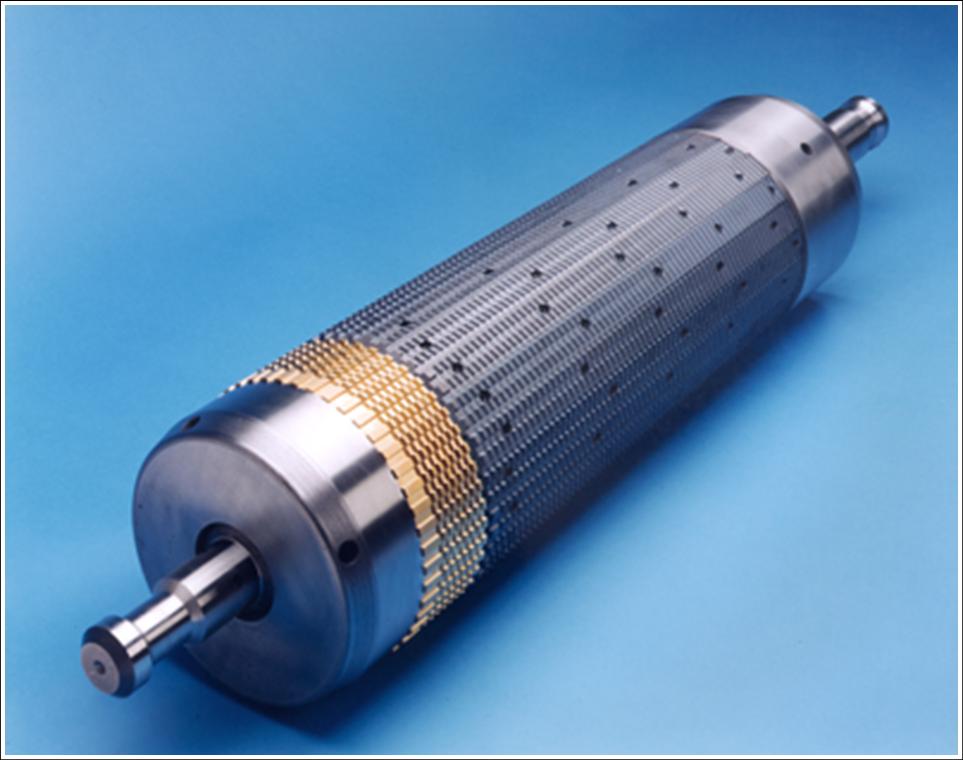
A TiN-coated spline broach. Image courtesy of Richter Precision.
As for lubricity, the coefficient of friction for coatings can be significantly lower than uncoated tool substrates. With forming tools, for instance, this lowered coefficient of friction means the tools exert less force because of reduced resistance.
In cutting applications, reduced friction means that less heat is generated during the machining process, thereby slowing the breakdown of the cutting edge.
In applications involving parts that slide, coatings greatly reduce the tendency of materials to adhere. This reduces friction and allows more unrestricted movement.
Increased Tool Life
A conservative estimate is that a PVD- or CVD-coated tool lasts two to three times longer than an uncoated tool. In some applications, the wear life of a coated tool has exceeded an uncoated tool’s life by more than 10 times.
Matching a substrate and application with an appropriate coating can result in dramatic improvements, but knowing which coating is best for a particular application is challenging. Many variables must be taken into account when choosing the coating process and composition for an application, from the workpiece material and failure mode to the tool substrate, tool tolerances and more.
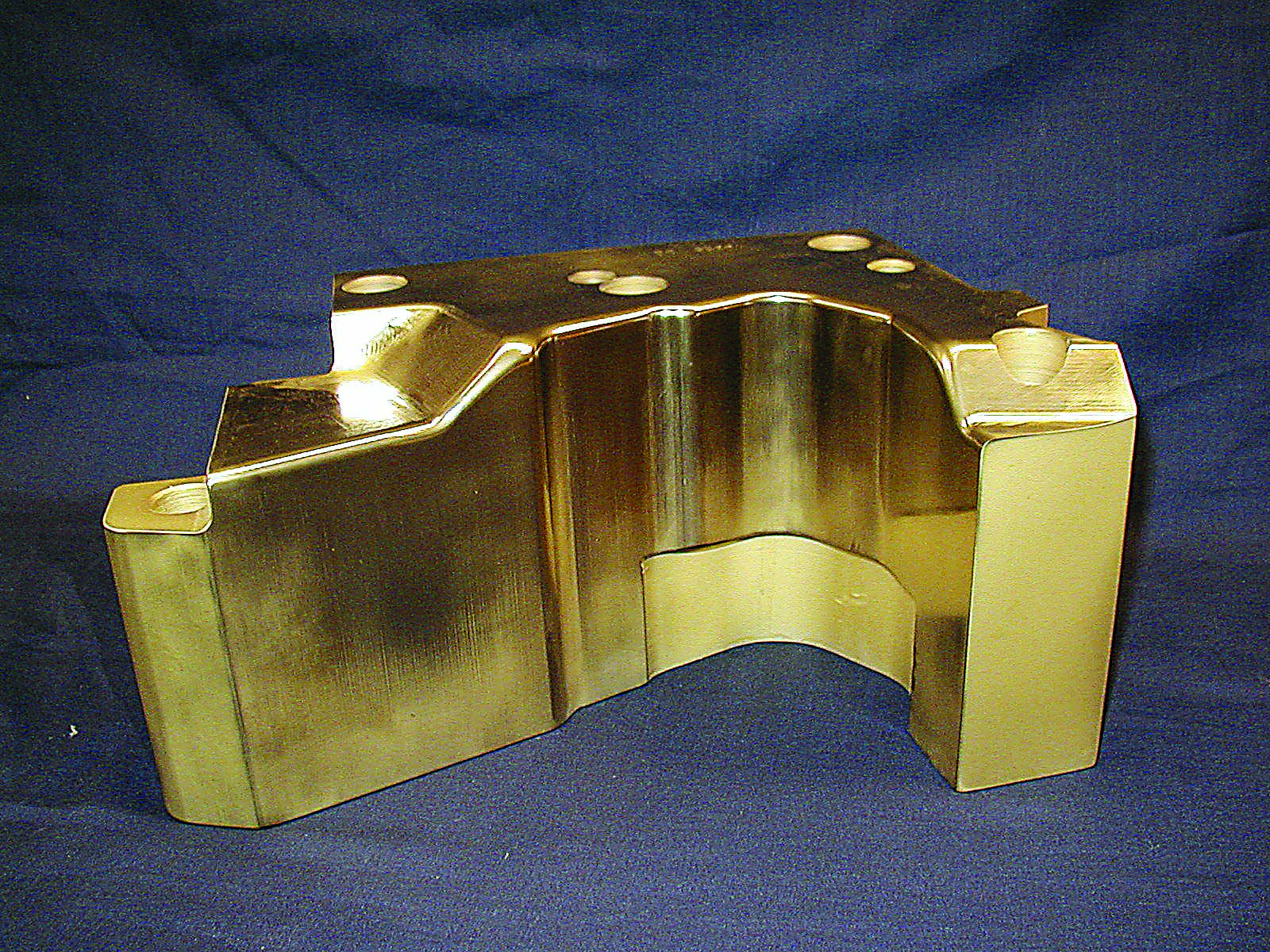
A die for automotive applications coated via the CVD process. Image courtesy of Richter Precision.
Broadly speaking, when materials and tolerances allow, CVD coatings have proven to be superior to PVD coatings in many applications. The CVD process creates a metallurgical and diffusion-type bond between the coating and the substrate. This bond is much stronger than the physical bond created through PVD processes.
But a potential area of concern with CVD coating is its high processing temperature: 1,925° F. This temperature can limit the use of CVD coatings in some applications because of tolerance concerns.
PVD coatings are suitable for a much wider range of substrates and applications. This is largely due to PVD coatings’ lower processing temperatures—385° F (196° C) to 950° F (510° C)—and average coating thicknesses of 2µm to 5µm. These characteristics, among others, make PVD coatings a better choice for applications in which close tolerances need to be held and for base materials that are sensitive to high temperatures.
For example, an HSS endmill likely would develop problems involving straightness and concentricity if the endmill was put through a CVD coating process, whereas the endmill would be an ideal application for PVD coating. Lower process temperatures mean no distortion will be observed for most materials as long as proper draw temperatures are utilized.
Of course, many other factors may be important to consider when choosing the appropriate coating process and composition. The company that coats your tools or components will be happy to offer guidance.
See also “Benefits of post-coating treatment.”
Glossary terms in this article
Related



Subscribers can use MFGAxis notes, saves and discussion tools with their innoNET account.


