
Single-point thread programming can be fun and easy
Before CNC lathes, single-point threading was a pain in the neck.
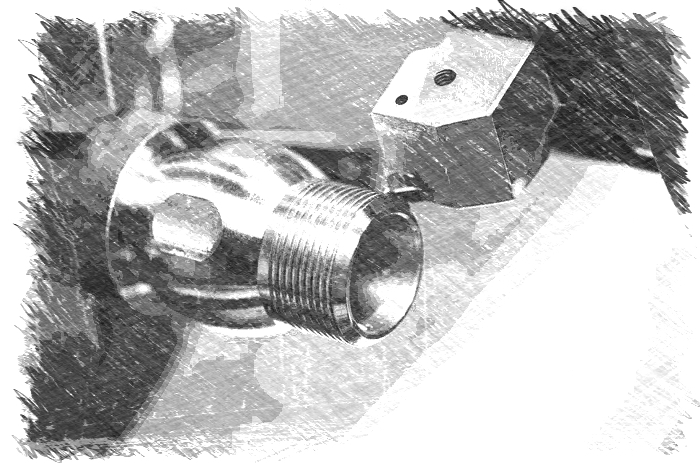
Before CNC lathes, single-point threading was a pain in the neck. Fast reflexes were needed to engage an engine lathe’s lead-screw dial at precisely the right time and disengage it before crashing into the shoulder. Around the time of the U.S. Bicentennial celebration, tape-operated lathes made all of this headache obsolete.
No more fooling with clumsy gearboxes or levers. You simply programmed where you wanted the tool to go and the machine control took care of the rest. For example, the following is a possible program for a 3/4″-16 × 1″-long thread on the OD of a shaft:
G0 X1.0 Z0.2 (position the tool to clear the thread’s major diameter and three to four times its pitch in front of the part face)
X0.72 (rapid move to the diameter of the first pass)
G32 Z-1.0 F0.0625 (cut at a feed rate of 0.0625 ipr, or 1.588 mm/rev.)
G0 X1.0 (move to the X-axis start position)
Z0.2 (rapid to the Z-axis start position)
The last four lines are repeated, taking progressively shallower passes in the X-axis until the thread is completed. By swapping X for Z in the G32 line, the cycle will cut spiral, or scroll, threads across the face of a workpiece. Tapered threads are also possible by including an X-axis command with the G32 Z-movement.
Powerful stuff, but G32 needs four lines of code for each threading pass and may require 100 or more lines to cut deep or large threads, especially in challenging materials such as nickel-based superalloys, where only a few thousandths can be removed per pass.
Although G32 remains a useful and important function for tapping threads on mills and lathes, it is otherwise an outdated method of single-point threading. Enter G92, a slightly more modern approach to single-point threading:
G0 X1.0 Z0.2 (initial tool position for 3/4″-16 × 1″-long thread)
G92 X0.72 Z-1.0 F0.0625 (first pass)
X0.71 (second pass)
…
X0.672 (final pass)
Instead of 100 lines of code, only 25 or so are needed. Just don’t forget to clear the cycle with a G0 command to a safe position or bad things will happen. Both of these cycles are far better than cranking handles and watching dials, but they make it difficult to achieve one aspect of efficient threading available on even the ugliest, oldest engine lathe: compound infeed, something many learned at vo-tech school.
Review the print ads from this magazine to continue
This quick advertiser review unlocks the rest of the article and keeps the full-screen reader focused on the ads instead of the page chrome.