

Repair or replace?
A guide to when shops should say farewell to used cutting tools.
All cutting tools eventually wear or break. It is up to end users as to how much tool life they are going to get before a cutter is gone for good. Resharpening cutting tools is a well-established practice, but when does it make sense to regrind instead of buying new? That’s a question any user of carbide and HSS rotary tools should consider. There are many variables in the equation: the tool’s geometry, substrate, coating, wear, damage and application all play a part in the decision to resharpen a tool.
Most companies, large and small, have their cutting tools resharpened, whether they do it in-house or outsource it to the OEM or, more commonly, a tool resharpener.
“Many of our customers are larger manufacturers,” said Jamie Dunneback, product manager of solid-carbide tools and gundrills for Star SU LLC, Farmington Hills, Mich. “Many smaller shops handle tool resharpening on a small cutter grinder, although they might use a local source, depending on the complexity of the tool.”
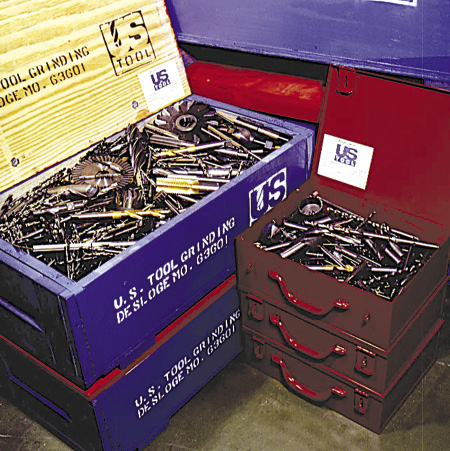
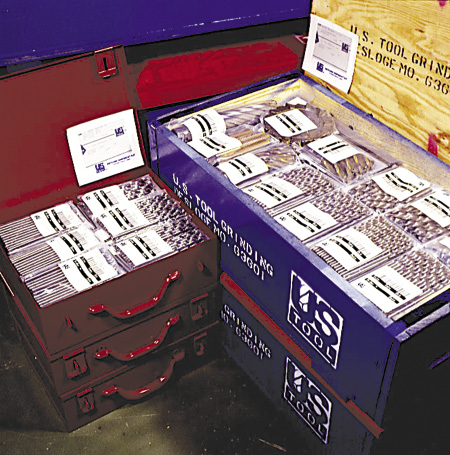
Courtesy of US Tool
Customers send in boxes of dull tools (above and below) and US Tool, after determining what is economical to resharpen and what is not, resharpens and packages them to be sent back. Customers ship from 30 lbs. up to 3,000 lbs. of tools per week to US Tool.
Although a tool resharpening house tends to resharpen all brands, most OEMs only accept their own and may even limit resharpening to certain product lines.
The determining factor when deciding to resharpen is cost-effectiveness.
“You can save from 35 to 80 percent on the cost of a new cutting tool by having it resharpened,” said Bruce Williams, president of US Tool Group, Farmington, Mo., with a savings of about 50 percent being the most common. With 400 employees, US Tool reconditions more than 500,000 cutting tools per week. Customers ship 30 lbs. to 3,000 lbs. of a variety of tools per week to US Tool.
Williams pointed out that even a 5 percent savings on some isolated cutting tools still makes resharpening worthwhile because the customer already owns the tools. “There is no procurement process, no purchase order needed for that specific tool,” he said.
Customers generally let the tool resharpener determine what tools are cost-effective to resharpen. “The customer sends in a whole box of dull tools—drills, endmills, custom tools, everything—and asks us to evaluate what is economical to resharpen and what is not,” said Jonathan Wilkof, manufacturing engineer, Stark Industrial LLC, North Canton, Ohio. In addition to operating as a job shop, Stark makes and resharpens cutting tools.
The main reason tools are not resharpened is because they have been resharpened enough times that there is no more value in them, according to Williams. “Either they are too short or too small in diameter.”
The second reason a tool might not be resharpened is damage, such as broken edges, structural problems or extensive margin wear. However, many broken or excessively worn drills are salvaged. The damaged section is cut off and the drill point is reestablished.
Have a Plan
If a tool is “pulled” before there is any chipping or significant wear, only a minimal amount of material is removed during regrinding, enhancing the economic gain. “We spend a lot of time educating our customers about tool wear, and most are knowledgeable, but we still get tools in all the time that are too far gone and not economical to resharpen,” Wilkof said.
Depending on the complexity of the tool geometries, Star SU works with customers to determine maximum tool life and when the tool should be taken out to maximize the number of regrinds and maintain part print tolerances, Dunneback noted.
The number of times a cutting tool can be resharpened depends on tool type and condition, but three to six times is typical. For instance, a general-purpose drill might be resharpened five or six times before being discarded, but a drill for making tight-tolerance holes might only be reground three times, according to cutting tool resharpeners.
Custom Benefits
Most types of round cutting tools are resharpened, with the majority being specials. “About 70 percent of our work involves custom tools, meaning the customer has a specific print and we recondition to that print, and about 30 percent are standards,” US Tool’s Williams said.
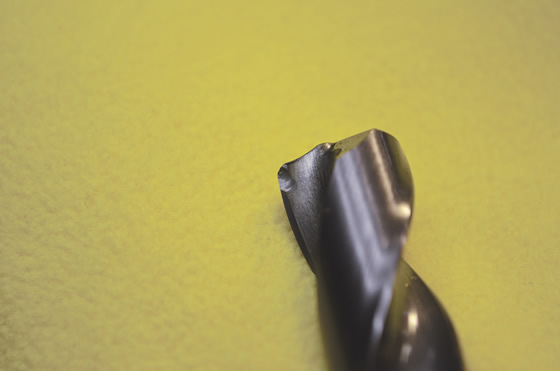
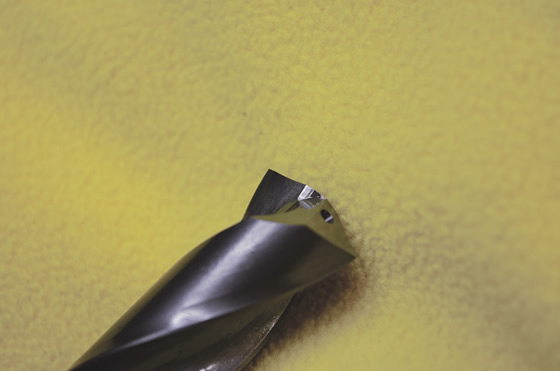
Courtesy of Specialty Tools
Before (above) and after (below) images show a worn solid-carbide drill resharpened by Specialty Tools.
Gear hobs and cutters, because of their high cost, are almost universally reconditioned. “Most gear cutters are designed for resharpening and reconditioning, where the tool user has an expectation of how much life the tool can provide and, therefore, has a systematic method of running the tool, pulling it out to resharpen and recoat, and then reinstalling it,” said Tom Bell, vice president of sales for cutting tools at Star SU’s facility in Hoffman Estates, Ill.
In general, the bigger the tool, the more economical it is to resharpen. “For example, a ½ “-dia., through-coolant drill that goes 10 diameters deep might cost $170 and can be resharpened for $25 to $30,” said Jerry Plummer, president of Specialty Tools Inc., Beloit, Wis., which specializes in solid-carbide high-performance drills. But Specialty Tools generally draws the line at solid-carbide drills 1⁄4 ” in diameter and smaller for sharpening because it is not as economical.
However, for large manufacturers that consume hundreds if not thousands of cutting tools monthly, it can still be economical to sharpen tools no matter the size. “Because US Tool processes 500,000 cutting tools per week, setup and operational costs are amortized,” Williams said. “Even twist drills costing less than $1 can be economically resharpened for heavy users of twist drills.” Carbide drills down to 1⁄16 ” in diameter are routinely resharpened, he added.
Whittling Down
It is inevitable that resharpening reduces tool diameter and length. Resharpening a drill or other tool that cuts on its tip affects its diameter less than other tools because only the end is resharpened, so the drill essentially remains the same nominal size. All drills have back taper, meaning they are larger in diameter at the end, so only a minute amount of diameter is lost, Williams noted.
When resharpening an endmill, however, the material removed from the cutting edges does decrease the diameter.
CNC machine tools have adjustable offsets, making it possible to apply resharpened tools. “CNC machines are programmed to compensate for the actual diameter and length of each tool and recalculate the toolpath to maintain the finished workpiece geometry,” Williams said. “More cost-effective and cost- conscious companies use cutter compensation effectively so they can use their tools multiple times.” (It is common practice for most tool sharpening services to label the tool package with the new diameter.)
When Stark Industrial designs cutting tools, it prefers to use cam relief for its endmills, Wilkof noted. “The benefit of cam relief is that when you resharpen the tool, you only have to resharpen the flute face, right at the cutting edge. If you have a primary and secondary relief, then you have to essentially resharpen the form itself and add back the primary and secondary relief, which takes more time and costs more.
“In the past 10 years there has been an explosion in tool geometries, with things like variable helixes and differential helixes,” he continued. “The first thing we do before resharpening is probe the helix to find the helix angle. We have to probe each flute because they are often different on some high-performance tools.”
The Last Coat
Review the print ads from this magazine to continue
This quick advertiser review unlocks the rest of the article and keeps the full-screen reader focused on the ads instead of the page chrome.
Advertisers included in this article experience
Print placements connected to this article
Nanomech
Technology too small to see.
Results too big to ignore. Starting the Nano-Revolution with inserts that last twice as long as nearest competitor*. Only our patented nano-composite and nano-structured solutions can achieve these results. Put us to the test. Call today. This Year’s Winner of R&D Magazine’s Technology Product of the Year. Nano-manufactured cutting tool solutions.
Technology too small to see. Results too big to ignore. Starting the Nano-Revolution with inserts that last twice as long as nearest competitor*. Only our patented nano-composite and nano-structured solutions can achieve these results. Put us to the test. Call today. *Results may vary depending on testing conditions. Go to www.nanomech.com/legal for details This Year’s Winner of R&D Magazine’s Technology Product of the Year. Nano-manufactured cutting tool solutions
Visit Nanomech View this placement in the issue recordPrint ads from this magazine
Results too big to ignore. Starting the Nano-Revolution with inserts that last twice as long as nearest competitor*. Only our patented nano-composite and nano-structured solutions can achieve these results. Put us to the test. Call today. This Year’s Winner of R&D Magazine’s Technology Product of the Year. Nano-manufactured cutting tool solutions.
Technology too small to see. Results too big to ignore. Starting the Nano-Revolution with inserts that last twice as long as nearest competitor*. Only our patented nano-composite and nano-structured solutions can achieve these results. Put us to the test. Call today. *Results may vary depending on testing conditions. Go to www.nanomech.com/legal for details This Year’s Winner of R&D Magazine’s Technology Product of the Year. Nano-manufactured cutting tool solutions
Continue reading
December 2013
After resharpening, coated tools are typically recoated, either in-house by the tool resharpener or outsourced.
“All of the tools we resharpen are recoated,” Specialty Tools’ Plummer said. “We do not strip the existing coating because it is harmful to the carbide substrate. With the few main types of coatings that we use, we achieve good coating adhesion over the existing coating. Coating thickness is generally never an issue. Even if a tool is coated over and over and suffers some adhesion issues on the existing coating, the new, sharpened cutting edge is not affected by the multiple layers of coating.”
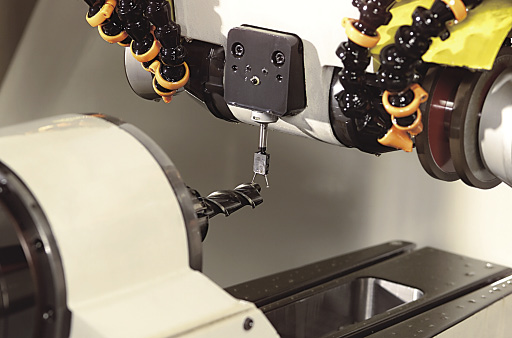
Courtesy of Stark Industrial
Stark Industrial performs on-machine probing to find the proper helix angle for resharpening a tool.
Coated or not, typical lead times for resharpened tools range from 2 to 4 weeks, although rush service is available.
“You could have standard catalog items delivered the next day,” Plummer said. “But instead of buying 20 new drills, you could have the tools resharpened for a lot less money. There is a wait time, so you have to make sure there are enough tools in the crib so it bridges the wait gap.”
Whether specials or standards, tool resharpening makes great economic sense. “The key is to get good- quality regrinds so you don’t have to adjust speeds and feeds or sacrifice part finishes or other part requirements because you are using a resharpened tool,” Plummer said, adding that receiving them back in a timely manner is also important. “If that is happening, it works for the whole industry. That is what makes it click.” CTE
Bringing indexable tools back to life
While round tools are just resharpened, indexable tool repair services actually replace material.
“We are building on material, where they are taking it off,” said Julie Reiling, president of Carbide Tool Services Inc., Anoka, Minn., an ISO-certified company that specializes in indexable tool repair. “We pride ourselves on economically repairing damaged tools to their original specifications without compromising the integrity of the manufacturer’s original material.”
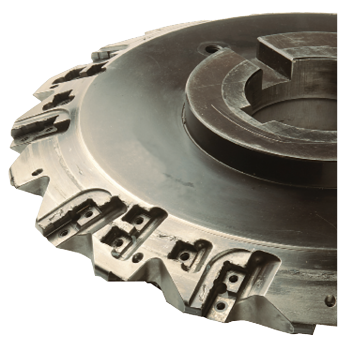
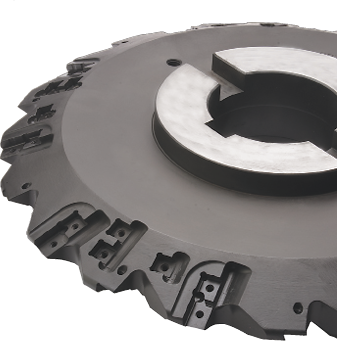
Courtesy of Carbide Tool Services
Before (top) and after (above) images show a worn indexable gear cutter repaired by Carbide Tool Services.
Any type of tool with an insert pocket can be considered for repair. “Savings on a repaired indexable tool can be from 50 to 85 percent over the purchase of a new tool,” said Olaf Klutke, president of GKI Cutting Tools, Crystal Lake, Ill., an indexable tool service that repairs about 30,000 different tools a year. “Savings on standard tools are typically lower, but savings for custom tools [which are usually costlier than standards] are more significant.”
Still, repairing standard tools can provide ample benefits. “A simple indexable tool that is in every shop in the country still costs $80 to $100 new, so repairing it for about $40 is worthwhile,” Klutke added.
Typical turnaround time for repaired indexable tools is 3 weeks. The repair service is even more critical for delivery of custom tools, as new tools can take up to 16 weeks from the OEM.
Rush services are available and a tool can be rebuilt in a day or two, depending on the tool. “We receive projects daily that need to be turned around in 24 hours or less because the customer is shut down or running without backup tooling,” Reiling said.
Tool damage is generally caused by routine wear and tear but could be the result of a crash. Carbide Tool Services removes the damaged area from the tool pocket, builds up the damaged area with proprietary welding rod that matches the original material and machines it to OEM specifications. “We control our welding process, and the material we use, to match the variety of materials used today,” Reiling said.
In GKI’s process, it removes the entire damaged section of the tool and material congruent with the original material is added. Insert pockets, coolant holes and screw holes are recut into the new material.
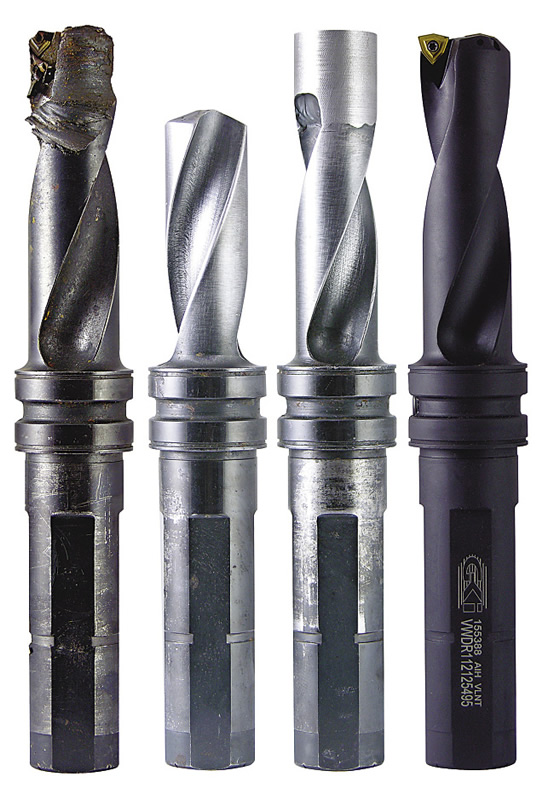
Courtesy of GKI
GKI’s repair process takes a damaged indexable drill through a process, from left to right, of cutting off the damaged end of the tool, adding new material and machining a new end on the tool, which results in a repaired tool with a new pocket, screw holes and coolant holes.
Indexable tools are not repairable when damage negatively impacts overall tool integrity. “The issues that we see where the tool shouldn’t be repaired are a cracked or bent tool. If the damage affects the integrity of the original structure, we recommend replacing it,” Reiling said.
Indexable tool repair services typically recommend three repairs for a tool before disposing of it. However, the number of repairs can vary depending on the tool, according to Reiling. It is important to evaluate the application of the tool, the extent of damage and other factors specific to the customer’s needs when determining the repair life a tool has, she said.
It helps if the customer practices preventative maintenance. “We have a customer that makes large diesel engines,” Klutke said. “Imagine a 48 ” milling cutter that costs $60,000 to $70,000 new that is used to machine an engine. The customer sends that tool in even though there is no visible damage. We essentially give it a tune-up so the cutter continues performing like new.”
When shipping a custom tool for repair, it helps to include components like setscrews and inserts in the package. In addition, the tool repairer should have a copy of the original blueprint for a special to ensure it is being repaired to original specifications. “Because of the very tight tolerances that are required on many indexable tools, it is important that we have accurate documentation and communication with the customer when rebuilding their tooling,” Reiling said.
—S. Woods
contributors
Carbide Tool Services Inc.
(800) 243-9577
www.carbidetool.com
GKI Inc.
(888) GKI-TOOL
www.gkitool.com
Specialty Tools Inc.
(608) 313-8730
www.specialtytoolsinc.com
Stark Industrial LLC
(800) 362-9732
www.starkindustrial.com
Star SU LLC
(847) 649-1450
www.star-su.com
US Tool Group
(800) 222-1771
www.ustg.net
Glossary terms in this article
Related

 MFGAxis Discussion
Be part of the shop-floor conversation
Like, save, or comment on this CTE story.
MFGAxis Discussion
Be part of the shop-floor conversation
Like, save, or comment on this CTE story.


MFGAxis Discussion