

Preset in stone
When tool pre setters are integrated into a shop, a key question is who will take the measurements.
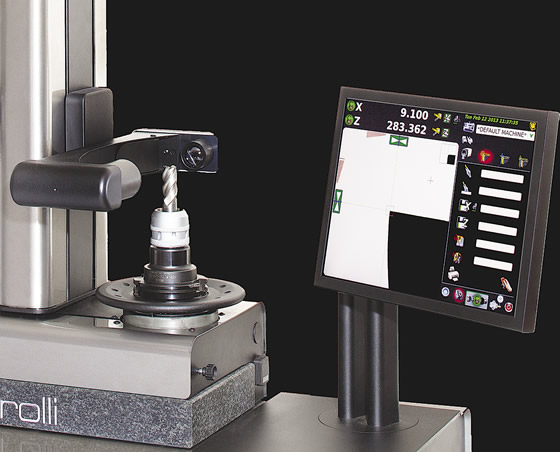
Courtesy of Koma Precision
Koma Precision’s Elbo Controlli presetters offer networked post-processing capability, allowing operators to transfer measurement data directly to the machine control.
When tool presetters are integrated into a shop, a key question is who will take the measurements.
Manual tool setup typically involves jogging the tool down to the workpiece, measuring the offsets and manually entering them into the machine’s offset table. And while some machinists can set up cutting tool assemblies this way in mere minutes, it’s likely that most shops would benefit from tool presetting. A primary benefit of presetting is the ability to run machine tools uninterrupted. But shops need to assess their needs and capabilities to get the most out of any investment in presetters.
One challenge is that some “supermachinists” are indeed as good as many presetters. Doug Sumner, product manager, tool measurement systems for BIG Kaiser Precision Tooling Inc., Hoffman Estates, Ill., noted a machinist with John Henry-caliber skills can indeed match the offsetting capabilities of a presetter tool-for-tool—though this is not often true for an entire shop.
“I’ve encountered setup operators who could load 20 tools into a machine in 20 minutes—put the tool in the spindle, touch it off, mark all the correct measurements, then onto the next one,” Sumner said. “One guy kept saying he didn’t see how a presetter would help him, and, eventually, I told him he was right, that it wouldn’t save him, personally, a bit of time. But then I asked, ‘Is that true of every operator here?’ The shop has been using presetters ever since.”
Once the value is established, the next challenge is to make sure the machinists are comfortable with the technology. Matt Ricotta, director of product marketing for Fairport, N.Y.-based Parlec Inc., said veteran machinists can be reluctant to adopt new technology, which has informed the way the company designed its software interface.
“We talk a lot about smartphones in our business,” he said. “With our software, we’ve tried to craft the interface to be intuitive in the same way that a smartphone is, to take somebody who might be afraid of new technology and make them feel comfortable using our technology.”
That interface includes using icons to represent different functions and avoiding text wherever possible. As a result, Ricotta said little training is typically required to familiarize operators with the interface.
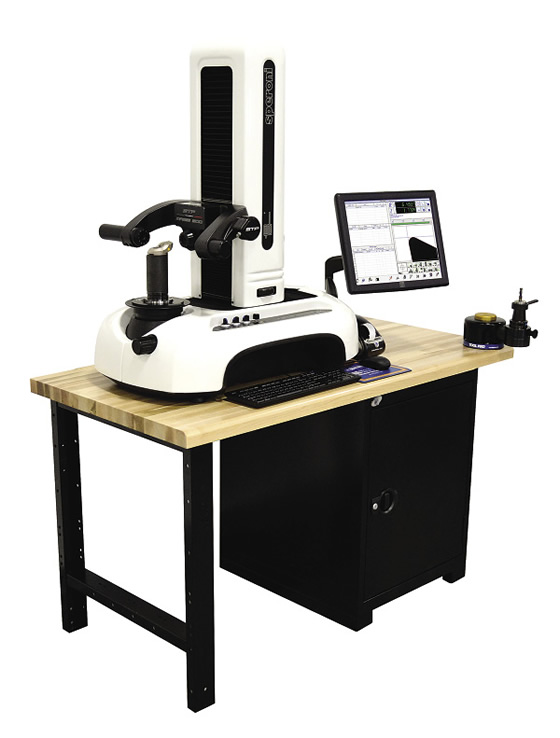
Courtesy of BIG Kaiser Precision Tooling
BIG Kaiser’s Speroni Magis “total tool setting solution” package features the addition of a workbench, storage cabinet, Tool Pro assembly device and a label printer.
Some shops have little difficulty integrating presetters into their daily operations. Toshiba’s Power System Div. in West Allis, Wis., has been using a Koma KHYAN presetter in its power generation equipment manufacturing operation for the past 2 years, according to CNC Machine Shop Supervisor Jeffrey Bradley.
“It didn’t take much to adapt our work flow to include the presetter,” he said. “After we bought it, Koma Precision spent 2 days installing the presetter and training the people in the milling department, including calibration and inspection training. The basic operation of the machine is relatively simple.”
A Touchy Subject
For machinists who are resistant to offline presetting, Haas Automation Inc. offers tool setting probes as a presetting alternative (see photo on below).
“The primary advantage of tool setting probes is the operator doesn’t have to measure the tools offline, then transfer those values into the machine tool,” said John Nelson, applications manager for the Oxnard, Calif.-based machine tool builder. “The time it takes to measure a given tool is relatively small compared to the additional labor that could go into putting each tool into the presetter, measuring it, marking the values and inputting them into the machine control.”
Haas tool probes can measure the length and diameter of the tool mounted in a lathe or mill. After making the initial setup, the automatic measurement cycle can be run at any time on any tool, ensuring tooling is still within tolerance during machining.
However, others are skeptical of using on-machine measurement techniques.
“There are touch probes that can be mounted on the table of the machine, as well as optical laser scanners, but the entire time you are measuring the offsets on the machine, you cannot cut chips,” said Jurgen Bettray, central regional sales manager for Koma Precision Inc., Windsor, Conn., which sells presetters and other machining equipment. “Having a presetter means your $500,000 machining center is not sitting idle—it’s earning its keep.”
The ideal situation may be a combination of the two.
“Some people think they don’t need a presetter because they have a tool probe, but presetters and tool probes are complementary,” said Parlec’s Ricotta. “By using a tool probe, you’re still taking up machine time that could be spent cutting chips. Tool probes can typically only give a length and a diameter, so what they’re great for is verification and qualification for critical parts. A tool presetter can gather much more information to a higher degree of accuracy, while allowing the machine spindle to keep cutting chips. Used together, you’ve got all your bases covered.”
Connect the Dots
Once a shop has decided to incorporate presetting, the question becomes what equipment to buy.
“The first consideration is how the shop wants to process its measurement data,” said Koma’s Bettray. “Once you’ve measured a tool on the presetter, you can either write the information down, print a label or post-process it either to a USB drive or through the shop’s computer network directly to the machine. All of our presetters are networkable, and even the entry-level presetters have the capability to do basic post-processing, but it all depends on how many measurements the customer wants to collect and what they want to do with the data.”
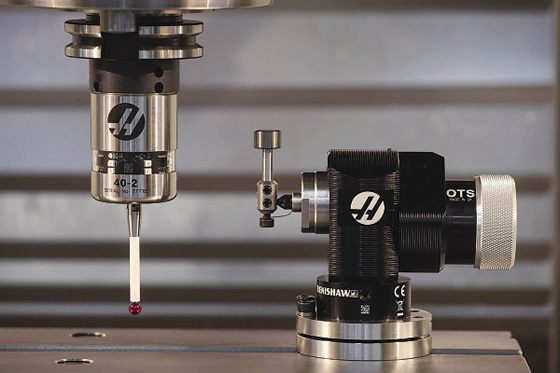
Courtesy of Haas Automation
Haas tool probes can measure the length and diameter of the cutting tool mounted in a lathe or mill.
The direct transfer of measurement data from presetter to machine tool eliminates the risk of operator data-entry error, he continued, because when printing a label, the figures must be entered manually into the machine control and writing the numbers down by hand creates two opportunities for errors. So, while not all shops have networks to support post-processing, Koma advises its customers to consider the benefits of this capability.
Parlec presetters also support connectivity via RS-232 or Ethernet, with more advanced Parlec models that feature more connectivity options and post-processing capabilities. In addition, Ricotta said Parlec sits on the technical advisory group of MTConnect and hopes to eventually support presetter connectivity via the MTConnect standard. BIG Kaiser’s base-level Diaset presetter does not offer post-processing, but the entire Speroni line comes with networking capability.
Review the print ads from this magazine to continue
This quick advertiser review unlocks the rest of the article and keeps the full-screen reader focused on the ads instead of the page chrome.
Continue reading
September 2014
Related

 MFGAxis Discussion
Be part of the shop-floor conversation
Like, save, or comment on this CTE story.
MFGAxis Discussion
Be part of the shop-floor conversation
Like, save, or comment on this CTE story.


MFGAxis Discussion