Mother of machine tool parts
When it comes to highly accurate machining technology, jig boring is better.
When it comes to highly accurate machining technology, jig boring is better. So say proponents of the century-old machining technique.
In the early part of the last century, jig boring started as a better way to make holes. But the technology has since evolved into a more-versatile machining option.
A conventional jig borer is a machine tool for boring highly accurate holes. “With higher-quality machining centers, you can look at achieving tolerances of 20µm in the work zone. But when you need to go beyond that—down to 10µm, 5µm or even 2µm—that puts you into the realm of a jig boring machine,” said Tom Dolan, vice president of sales and marketing for jig-borer builder Mitsui Seiki USA Inc., Franklin Lakes, N.J.

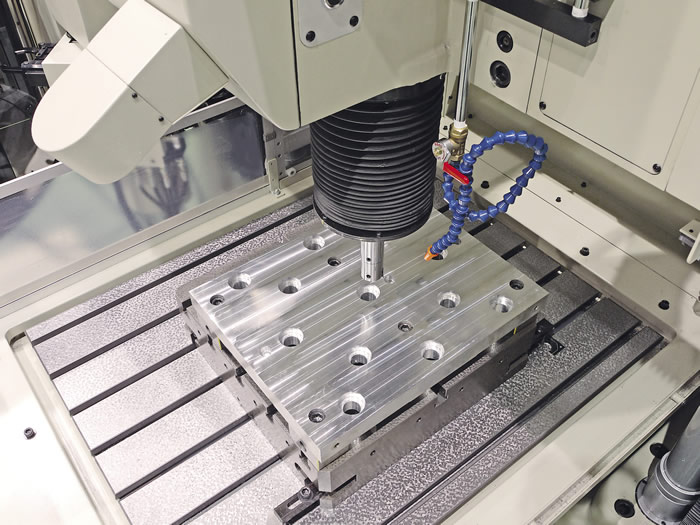
Manufacturers of mold bases use jig boring and jig milling machines to finish bores with tolerances tighter than 5µm in roundness, perpendicularity and straightness. Image courtesy Mitsui Seiki USA.
To achieve the required level of precision, jig borers are designed and built in ways that set them apart from typical machines. For example, jig borers feature components made with tighter-than-normal tolerances, as well as improved rigidity, thermal stability and vibration-damping capabilities, according to Dolan.
What’s more, jig borers are made to maintain their accuracy for long periods of time. Dolan said it’s not unusual for a jig borer to remain exceptionally accurate for 20 years or more.
Review the print ads from this magazine to continue
This quick advertiser review unlocks the rest of the article and keeps the full-screen reader focused on the ads instead of the page chrome.