
Micromachining: A light touch
A growing number of manufacturers in the medical industry are seeing the light when choosing a machining option for micro parts and features.
A growing number of manufacturers in the medical industry are seeing the light when choosing a machining option for micro parts and features.
The light they’re seeing emanates from laser micromachining systems. They cut faster and cleaner while offering better cut quality than competitive wire EDM, according to Onik Bhattacharyya, director of sales and business development for GF Microlution Inc., Chicago, which builds laser micromachining systems and micromilling machines.
As a result, laser micromachining has “basically taken over some medical parts that have traditionally been done with wire EDM,” Bhattacharyya said, citing, as examples, stents, heart valves and ablation catheter tips. Machined by Microlution laser systems, the catheter tips can be under 4mm (0.157″) in overall size with 0.1mm (0.004″) features, such as holes and slots.
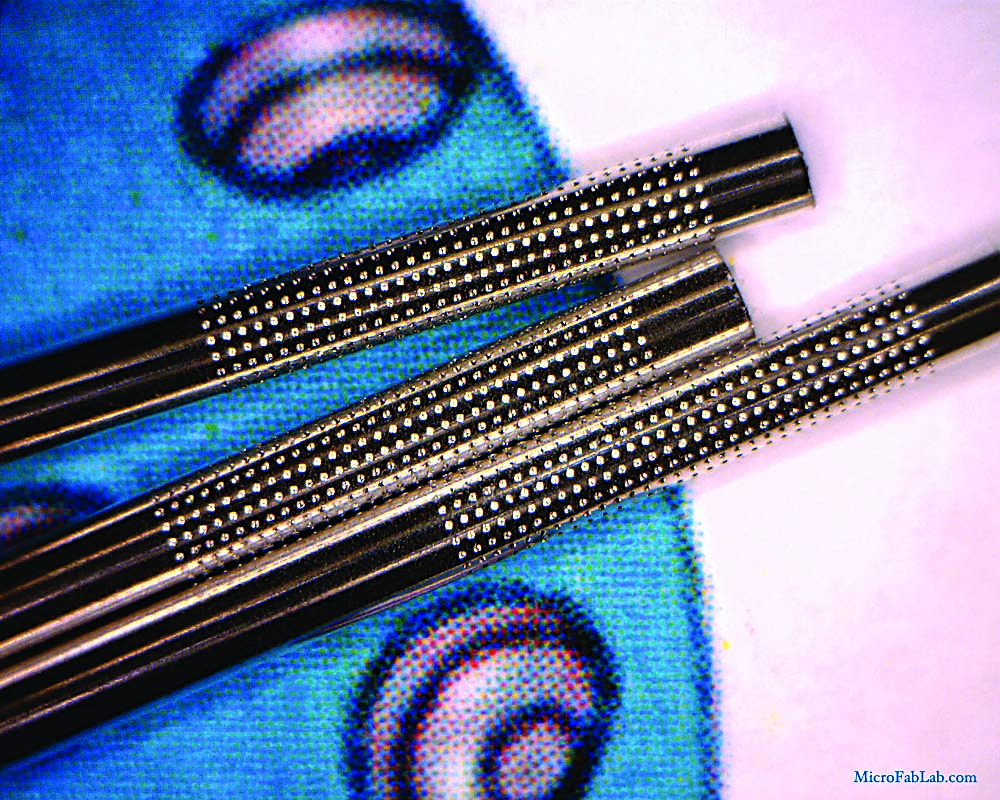
For these stainless steel medical devices, Potomac Photonics uses a laser to cut the tubes to length and to create wells that measure about 75µm in diameter. Image courtesy of Potomac Photonics.
Bhattacharyya said laser micromachining systems give designers greater freedom “because you can do things with the laser beam much easier than you can with a fine wire.” Drilling an hourglass-shaped hole with a laser, for example, is an “extremely straightforward” process that simply requires the right software program, he said. “But to do that with wire EDM, you would need a specialized system and somebody who knows how to run it well.”
Software-driven lasers provide faster turnaround times than other machining options, said Mike Davis, vice president of manufacturing for Baltimore-based Potomac Photonics, which offers laser micromachining services. “We can take a simple CAD file, quickly load it into the system and cut patterns in a wide variety of materials. The customer can make a change to the file, and we can then put it right back in the system and produce another set of parts. This [flexibility] helps product developers get through iterations so they can bring their products to market more quickly.”
Some of the smallest medical products made by Potomac are devices used to hold implantable lenses in position in the eye. They can be as small as 100µm wide and have features down to 20µm. Potomac also makes larger parts that feature laser-drilled holes down to 2µm in diameter for applications in biotechnology and drug discovery.
No Material Limits
In addition to EDM, laser micromachining competes with many mechanical machining technologies that apply microtools, including chemical etching and electroforming. But these methods have material limitations, noted Igor Lukash, technical director at Gateway Laser Services, a micromachining firm in Maryland Heights, Mo.
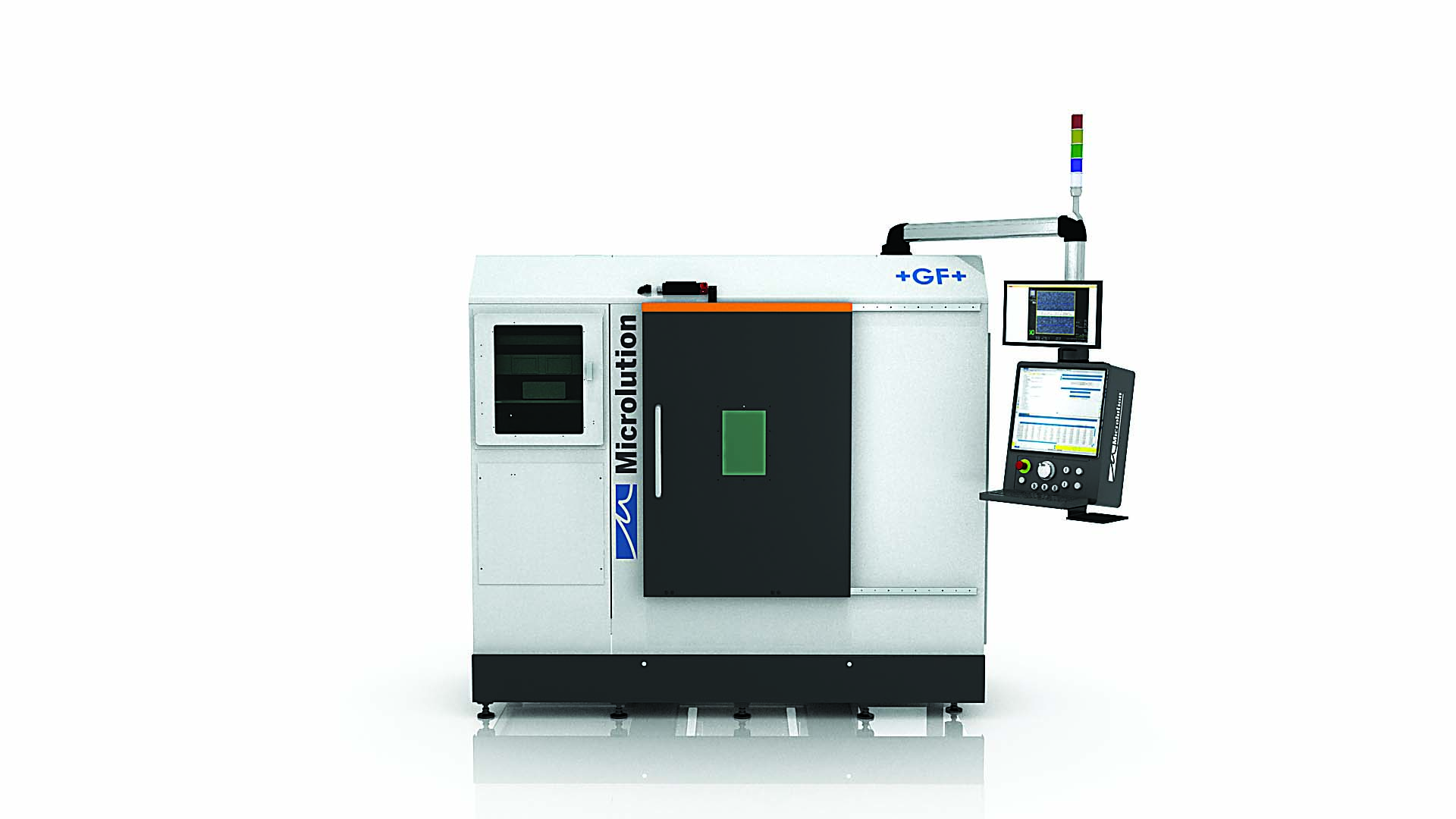
The ML-5 is a 5-axis micromachining workstation featuring an ultrafast laser. Image courtesy of GF Microlution.
For example, EDM, chemical etching and electroforming work only with metals. By contrast, Lukash said all materials can be successfully machined with a laser.
Common materials for medical microparts include polymers such as Kapton and PEEK, as well as stainless steel and titanium, according to Potomac’s Davis. For use in medical devices, he said, “we have to be able to clean those materials thoroughly after laser processing so that we don’t leave any debris or residues behind.”
Review the print ads from this magazine to continue
This quick advertiser review unlocks the rest of the article and keeps the full-screen reader focused on the ads instead of the page chrome.