

Integrating automated nesting: General Industry Coverage
The Get With The Program column in the July 2014 issue of Cutting Tool Engineering magazine delves into integrating automated nesting into production work flows.
Traditionally, a CAD/CAM nesting system has been considered an NC pro-gramming tool, where 2D models of components generated in CAD software are used to develop G code to drive CNC machines. In today’s manufacturing en-vironment, nesting software as part of a CAM package plays an increasingly im-portant role in maximizing efficiency and productivity.
As with other “computer-aided” tech-nologies, CAM systems do not eliminate the need for skilled professionals, such as manufacturing engineers, NC program-mers and machinists. CAM leverages the value of these skilled workers through ad-vanced productivity tools while helping to build the skills of new professionals through the use of visualization, simu-lation and optimization tools.
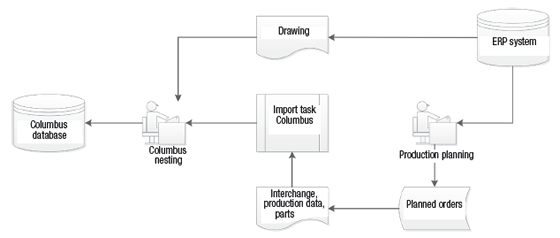
High-end nesting software operates on a desktop PC and, using CAM tech-nology, can streamline the work flow of machining operations. This begins with the automated importation of or-ders and parts, including their CAD ge-ometry, from a business database to a system that tracks and controls plate inventory management, including au-tomated nesting and NC program gener-ation for a variety of tools and machines. (Plate inventory management keeps track of the plates, or workpieces, in stock, their use and geometry when changed by a nest, and tracks what parts were cut from which plate.)
All images courtesy ESAB Welding & Cutting Products
Using CAM technology, nesting software can streamline production workflow.
Integration of the nesting software into existing enterprise resource plan-ning systems is key, because it saves a significant amount of production time. The part and order information in the ERP system is necessary for work preparation. But how is this data trans-ferred to the nesting system? Most nest-ing systems can automatically read this information from a variety of planning systems, saving 30 minutes to 3 hours compared to manual entry, depending on the number of orders to be managed.
For example, ESAB’s Columbus III CAD/CAM programming and nesting software enables parts to be imported from an existing assembly without the need for customized import filters. This provides more efficient data exchange from the software to the ERP system, eliminating the need for a costly, cus-tomized integration process.
Review the print ads from this magazine to continue
This quick advertiser review unlocks the rest of the article and keeps the full-screen reader focused on the ads instead of the page chrome.
Continue reading
July 2014
 MFGAxis Discussion
Be part of the shop-floor conversation
Like, save, or comment on this CTE story.
MFGAxis Discussion
Be part of the shop-floor conversation
Like, save, or comment on this CTE story.


MFGAxis Discussion