

Gear pioneer Kate Gleason was way ahead of her time
With respect to the norms of the 19th century, Kate Gleason was way ahead of her time.
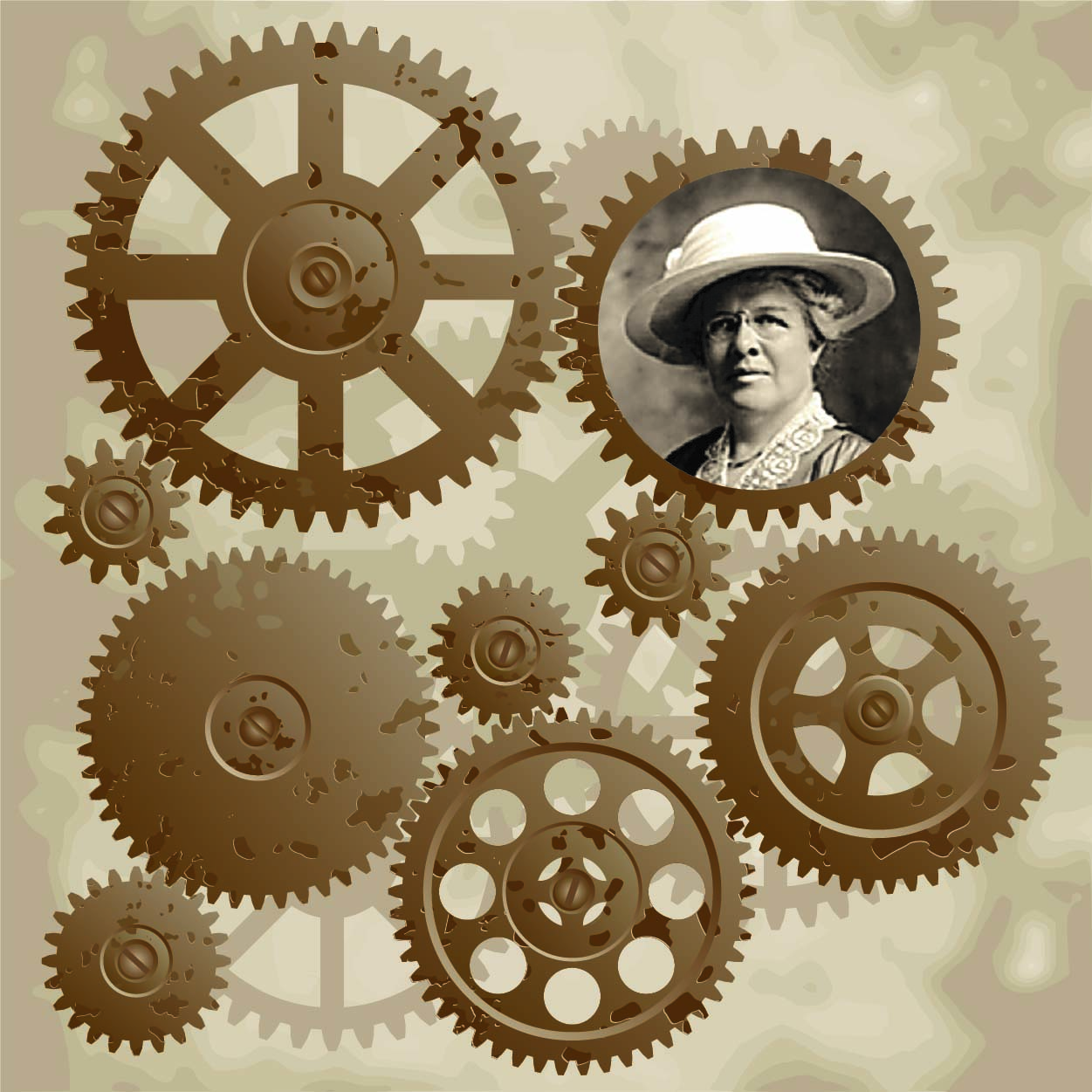 In honor of Women’s History Month, CTE remembers groundbreaker Catherine “Kate” Anselm Gleason (1865-1933). During the restrictive culture of her time, she helped shape the global cutting tools industry as a sales engineer for her family’s gear cutting machinery business.
In doing so, Gleason prompted admiration for her warm, personal approach and flamboyant style, as well as the opprobrium of certain members of her family.
Now named Gleason Corp., Rochester, N.Y., what started as a one-person business recently celebrated its 150th anniversary. Today, the multinational corporation produces advanced gear cutting and grinding machines—and the cutting tools and grinding wheels they use—to produce the gears found in an array of applications.
The company began humbly in Rochester in 1865. Kate’s father, William Gleason, was an immigrant from Ireland. He opened a machine shop where he produced metalworking tools and machines, such as engine lathes and planers.
In 1874, William invented and patented the bevel gear planer, a type of machine that opened vast new possibilities for the transmission of motive power. Bevel gears are cone-shaped and make it possible to transmit power at a 90° angle from the drive shaft of a car to its rear wheel axle (see “Bevel Gears: Then and Now” on this page).
Kate’s Involvement
After her older stepbrother died, 11-year-old Kate volunteered to help with bookkeeping at her father’s machine shop. Kate must have inherited some of her father’s mechanical ability. By 14, she was running the business office and reading engineering books at night.
In 1884, Kate entered the Sibley College of Mechanical Engineering and Mechanic Arts at Cornell University, making her one of the first women to study engineering in the U.S. Although she never earned a degree because of financial problems at home, she continued to learn on the job. She also took courses at the local Rochester Athenaeum and Mechanics Institute (later renamed the Rochester Institute of Technology).
A letter to her brother, James, written in 1889, shows Kate’s understanding of machinery and sales. She described in detail a taper-attachment lathe requested by a customer, then advised James on how to make the sale.
By the time she was 25, Kate was officially named secretary-treasurer of the company, becoming a stockholder along with her two younger brothers. Unfortunately for Kate, family relationships began to disintegrate because of her unconventional ways.
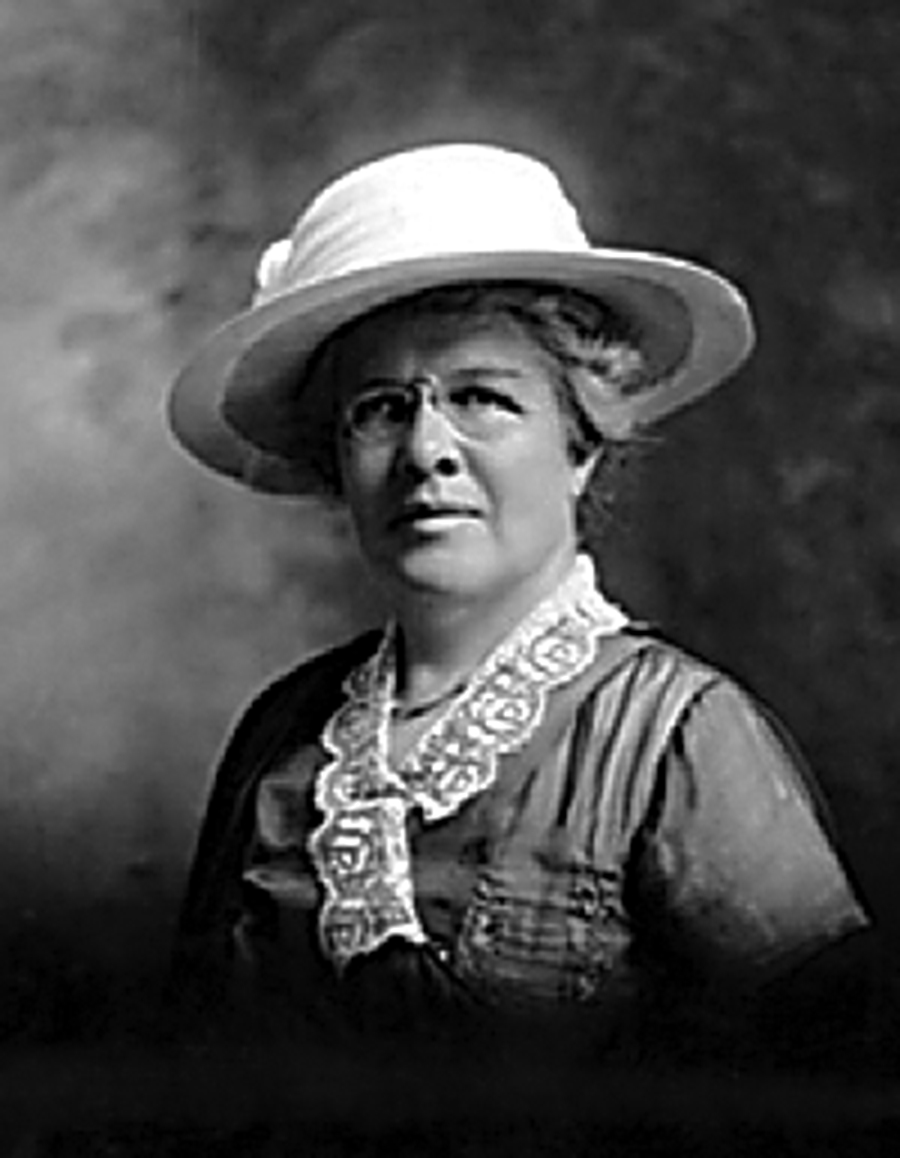
Kate lived in the Victorian era, when women lived highly restricted lives. Yet in 1888, she traveled alone for a 4-day sales trip to Ohio. Though worried about how she would be treated as a single woman doing business in industrial shops, she wrote to her brother that “in every case I was treated with the most distinguished consideration.”
Soon, Kate, who has been described as “nobody’s fool when it came to machine tools,” became the company’s chief salesperson, traveling across the country to promote products.
In 1893, during an economic downturn in the U.S., Kate decided to sail to Europe to fill her order book. Some people were shocked at the 28-year-old single woman’s decision to travel internationally without an escort and not knowing anyone at her destination.
Taking only $200, a black cashmere dress and several letters of introduction, she boarded a steamer for the 2-month voyage across the Atlantic, accompanied by 14 men and some cattle. The men took turns strolling with her around the deck for recreation.
The trip was a huge success. It made Gleason one of the first manufacturing companies to expand to Europe. Kate obtained orders for Gleason machines in Scotland, England, France and Germany, establishing a tradition of international marketing that undergirds the company to this day.
Though customers appreciated Kate’s salesmanship, her younger brothers, who ran the manufacturing shop, did not take kindly to her business methods.
“Kate was a rather self-assured, domineering, hard-to-get-along-with woman,” said Janis Gleason, wife of Kate’s great-nephew. “She knew her customers. She listened to them, and she understood their needs. She would come back to the shop and suggest that her brothers be a little more flexible, and that didn’t go over very well.”
Ultimately, the personality clash with her brothers came to a head. Kate chose to leave the company to which she had dedicated her life.
Soon after, she was given the opportunity to manage another Rochester machine tool firm, which she returned from bankruptcy to profitability within a year and a half. She eventually became involved in running a bank and other business ventures.
Through the years, she also supported the women’s suffrage movement (her mother was Susan B. Anthony’s friend) and a host of charities.
Kate’s Honors
Review the print ads from this magazine to continue
This quick advertiser review unlocks the rest of the article and keeps the full-screen reader focused on the ads instead of the page chrome.
Continue reading
March 2018
 MFGAxis Discussion
Be part of the shop-floor conversation
Like, save, or comment on this CTE story.
MFGAxis Discussion
Be part of the shop-floor conversation
Like, save, or comment on this CTE story.


MFGAxis Discussion