

The evolving technology of tool presetting
A close look at the evolving technology of tool presetting.
CNC machining has replaced conventional, or manual, machining as the primary metal-removal method in most machine shops.
Although CNC applications, programs and setups vary from shop to shop, every CNC machine needs tool data to operate correctly. Tool data necessary for the control to function correctly can include tool diameter, tool radius, tool length, corner radius, tool shape and tool type.
This CNC tool presetter (below) can be programmed to measure tool angles and radii as well as diameter and length. The ability to measure tool form reduces incoming inspection and eliminates errors at the machine. All images courtesy C. Tate.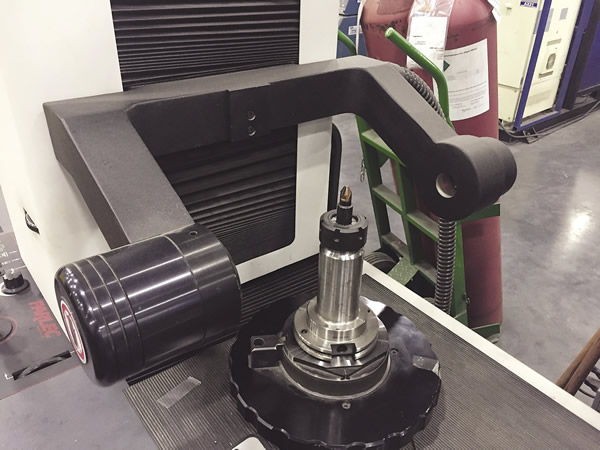
Various methods exist for collecting the necessary measurements. Newer machines often have onboard devices that allow the operator to easily measure a tool and store the necessary information. In other cases, because the machine is older or the application dictates it, an operator must measure a tool outside the machine to obtain the data. This is typically referred to as tool presetting.
Old controls, like those in the early 1970s, had very little memory and lacked the ability to store tool data. Therefore, programmers would have to use G-code commands like G50, among other methods, which offset the program origin to accommodate for different tool lengths. In these applications, new tools were preset to a known length before being loaded into the machine so that a program change was not necessary.
Controls have been able to store and utilize tool measurements for several decades, negating the need to set tools to a specific length. In most shops, the act of presetting can more accurately be called tool measurement, even though the measuring machines are often called tool setters or presetters.
Multiple Methods
Tool measurement can be performed in many ways, with no one method being better or worse than another. Machining application, shop culture, tool type and machine configuration are some of the considerations when choosing a method for measuring tools.
The simplest tool setters function much like a height gage. The cutting tool is placed in a holding fixture and the tool setter is brought into contact with the cutting tool. Measurements are then recorded and entered into the machine tool control. These tool setters are inexpensive and robust. Although simple and robust, the contact-type tool setters are slightly less accurate than the more advanced optical setters and cannot be automated. Contact models are still a good choice for shops that need a budget-friendly solution or do not want the maintenance issues associated with more-complex machines.
Having a tool setter integrated into a machine allows tools to be set before each use, and checking its length each time a tool is used mitigates tool wear and can detect tool breakage.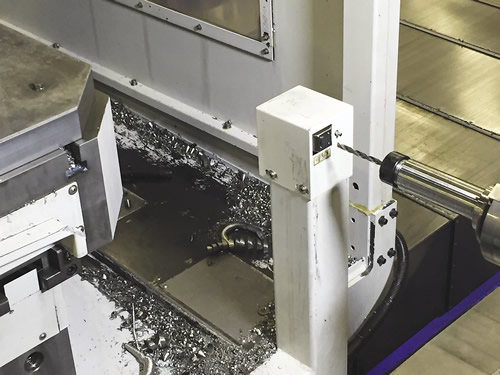
Newer tool setting technologies vary in complexity but rely almost exclusively on optics to generate measurements. Optical machines gather measurements via calibrated cameras and show results on a digital display. At minimum, optical machines provide a magnified view of the cutting tool edge as a silhouette, similar to an optical comparator. On more-advanced machines, the view is detailed and can allow the operator to see small imperfections. The view is so detailed that users must remove lint from the tool to achieve precise measurements.
Review the print ads from this magazine to continue
This quick advertiser review unlocks the rest of the article and keeps the full-screen reader focused on the ads instead of the page chrome.
Continue reading
September 2016
Related

 MFGAxis Discussion
Be part of the shop-floor conversation
Like, save, or comment on this CTE story.
MFGAxis Discussion
Be part of the shop-floor conversation
Like, save, or comment on this CTE story.


MFGAxis Discussion