Pumping Up Production: Drilling Performance
As the U.S. strives to become less dependent on foreign energy sources, energy producers are increasingly employing hydraulic fracturing, or "fracking," to drill shale deposits…
Making parts for hydraulic fracturing equipment presents opportunities but requires the right tools.
As the U.S. strives to become less dependent on foreign energy sources, energy producers are increasingly employing hydraulic fracturing, or “fracking,” to drill shale deposits and extract natural gas and some oil. That booming market requires a range of parts from shops around the country.

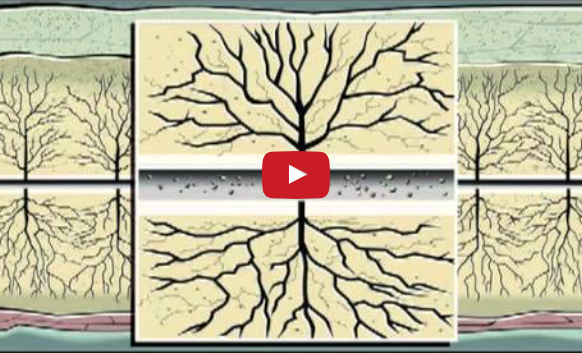
Learn more about making parts for hydraulic fracturing equipment
For more information, view a video presentation from MAG about programmable boring bars and read a short article about the origin and use of the word “fracking” on www.ctemag.com by clicking here.
The fracking process involves vertically drilling a well thousands of feet into the ground and then horizontally drilling into the shale. There, a wire equipped with explosive charges perforates the well casing to create fissures in the fine-grain shale. Millions of gallons of a water, sand and chemical mixture are then pumped, at high pressure, into wells to expand the fissures and enable gas to pass through them. As the mixture is pumped out of the well, the gas follows the pipeline to the wellhead on the surface.
In April 2011, the U.S. Energy Information Administration estimated that the U.S. had 862 trillion cubic feet of technically recoverable shale gas during 2009, stated PricewaterhouseCoopers LLP in its report, “Shale Gas: A renaissance in US manufacturing?” The report noted that the Marcellus basin, located primarily in the mid-Atlantic, is considered the largest U.S. shale deposit with 410 tcf of technically recoverable natural gas per EIA estimates. However, a more recent assessment from the United States Geological Survey estimates 84 tcf of technically recoverable gas in this formation, underscoring the uncertainty around these figures, according to PwC, a provider of consulting and other services.
In addition to the Marcellus basin, shale deposits are being drilled in many states, including Michigan, Texas, Oklahoma, Colorado, Arkansas and Alabama.
In the report, Jay Timmons, president and CEO of the National Association of Manufacturers, stated: “More and more Americans are beginning to recognize the enormous potential of shale gas. The impact of increased shale gas development will ripple through our economy, with manufacturers, in particular, seeing great benefits. Shale gas development has the potential to boost manufacturing employment by one million jobs by the middle of the next decade.”
Machining Pump Parts
One manufacturer serving the fracking sector that has already added jobs is Weir SPM, Ft. Worth, Texas, which makes pumps and flow controls for the drilling and well-service/stimulation markets and provides aftermarket recertification and repair services. Since the end of 2009, the company has added about 1,000 employees globally, more than doubling its workforce, noted Matt Treida, product manager – flow products. “We’ve seen tremendous growth in the last 2 years—more than we’ve ever seen before,” he said.
Treida added that the company machines nearly everything it produces on the pump side, including an array of parts for the fluid, or wet, end of the pump, such as valves, high-pressure piping and integral components.
On the flow side, part dimensions range from about 1 ‘ to 2 ‘, and the parts weigh up to 400 lbs. The pumps themselves weigh up to 20,000 lbs. and provide pressures typically from 9,000 to 13,000 psi and as high as 30,000 psi.
To withstand those demanding environments, the vast majority of parts are made of 4000 series steels, including 4140, 4340 and 4715. “They’re low-carbon alloys with some nickel content,” Treida said. “The mix we get through our vendors is proprietary.”
Annual part volumes are from 2,000 units on the pump side to tens of thousands on the flow side, Treida noted. “They’re very harsh applications, so there’s a high replacement rate for a lot of the products, particularly on the flow-control side.”
The workpieces are either coin-pressed or hammer forgings, which are then heat treated. The heat treatment not only creates “a crust” on the surface that reduces machinability, but varies forging dimensions from heat lot to heat lot, according to Mike Sumpter, mechanical engineer for Weir SPM. “It makes it difficult to create fixtures that will adapt and adjust to that,” he said. “There’s a lot of special fixturing that has to be done.”
Courtesy of MAG
A programmable boring bar from MAG cuts a counterbore. For this application, the bar also cuts additional bores and counterbores inside the part.
After machining, the company heat treats many parts to a hardness of around 60 HRC, Sumpter noted. However, he added that the company doesn’t cut them in that hardened state because the parts are engineered to meet their specifications, such as for clearances, even if heat-treatment distortion occurs. “That’s part of our lean program,” Sumpter said.
The parts feature large bores—up to 22 ” and larger—and are often produced on horizontal machining centers with a U-axis. Sumpter estimated that about 60 percent are made on those machines with the remainder on various turning and milling machines.
Tool Choices
That type of HMC has a quill that feeds out parallel and perpendicular to the spindle, explained Rod Zimmerman, vice president of business development for Iscar Metals Inc., Arlington, Texas, who lives above a natural gas field in the Dallas-Ft. Worth area where hydraulic fracturing occurs. “Basically, the machine allows you to go inside a bore and do a contour or an undercut,” he said.
However, those machines tend to be expensive and part manufacturers without them can use slotting-type cutters to do undercuts, according to Zimmerman. To square fluid ends, he noted that end users can slab mill using a facemill with a 45° approach angle. He added that a common DOC for that tool is from 0.250 ” to 0.300 ” compared to 0.100 ” to 0.140 ” for a high-feed cutter, which might have a 17° approach angle. To really hog out metal, Iscar offers a large insert that can achieve a DOC of nearly ¾ ” with a 65° approach angle. “You could probably achieve the highest metal-removal rate with that cutter,” Zimmerman said. “It’s a bruiser, but not that many people have that type of high-horsepower, high-torque machine to run that cutter. This is one of those cutters where the chips sound like crowbars hitting the floor.”
Regardless of the machine, Zimmerman pointed out that the toolmaker is able to calculate which cutter and machining process will remove material the fastest. “We have a lot of options today.”
In the near future, one of those options will be a slotting-style cutter with built-in high-feed technology, which Zimmerman noted is in the prototype stage. That’s beneficial, for example, when creating clearance on the fluid end of a pump to enable it to be bolted to the power frame and having to reach around a shoulder with a long-overhang, slotting-style cutter. “That’s probably one of the most difficult machining operations,” he said.
Zimmerman added that caps for high-pressure fracking pumps are relatively large and therefore have large buttress threads, and a U-axis machine enables a user to quickly and accurately single-point thread that feature. “If you don’t have that type of machine, thread milling is the way to go,” he said.
Get Your Groove On
In addition to threading, most of the high-pressure equipment for hydraulic fracturing has ring groove seals, according to John Valkosky, product specialist for Femco Machine Co., Punxsutawney, Pa., which produces fracking components, such as top connectors, crosses, adapters, spools, pull plugs and ball droppers. All the parts are made of heat-treated alloy steel and measure up to 37 ” in diameter and 24 ” long, he noted. “We have the capabilities to machine much larger parts,” Valkosky said, adding that Femco has resurfaced oil and gas parts up to 24 ” in diameter and 60 ” long.
A part’s hardness and other physical requirements vary according to the pressure rating. “We pressure test our parts in-house so we can rate them at the required pressures,” Valkosky said.
Femco specializes in custom work. “The customer can come to us with his specific ideas and we will work with him to design something to meet his needs,” Valkosky said, noting that might include overcoming manufacturability and part integrity issues. The shop also reverse engineers parts while striving to make them better than the original ones, including improving part life and integrity, according to Valkosky.
Heartland Enterprises Ltd., Fredericksburg, Texas, is another machine shop that produces parts for hydraulic fracturing pumps. Owner Dave Campbell noted that volumes start in the hundreds, are produced on horizontal lathes and vertical mills, and none of the jobs are simple. “There are challenges with every part,” he said. “You just have to figure out what’s the best way to machine it.”
The 50-person shop operates on a 10-hour day shift and 12-hour night shift, and Campbell expects to continue to add jobs as hydraulic fracturing gains momentum. “It’s a growing segment for us,” he said. “Texas is taking a lot of it, but fracking is red hot everywhere.”
Keeping Up With Demand
Review the print ads from this magazine to continue
This quick advertiser review unlocks the rest of the article and keeps the full-screen reader focused on the ads instead of the page chrome.