

Tips for Tapping Hard Materials
7 rules of thumb to reduce anxiety when tapping holes in hard-to-machine materials
There are sensations and experiences that must be experienced before they can be appreciated. Believe it or not, machining can provide sensations that only a machinist can truly understand.
For me it is the trepidation that I feel when a tap is about to enter the hole in hard-to-machine materials like nickel alloys. While I have never bungee jumped, I think tapping in difficult materials is probably similar. The tap going in the hole is like taking the first step, you have to push through the fear and let yourself go. The second level of fear is during the fall, hoping the rope will hold and the tap will get to the bottom. And third is the exhilaration of having survived the fall and the tap coming back out of the hole in one piece.
To reduce the anxiety of tapping holes in difficult materials I have developed my own rules of thumb. These are the things I do to give myself the best chance of success and minimize the fear of jumping.
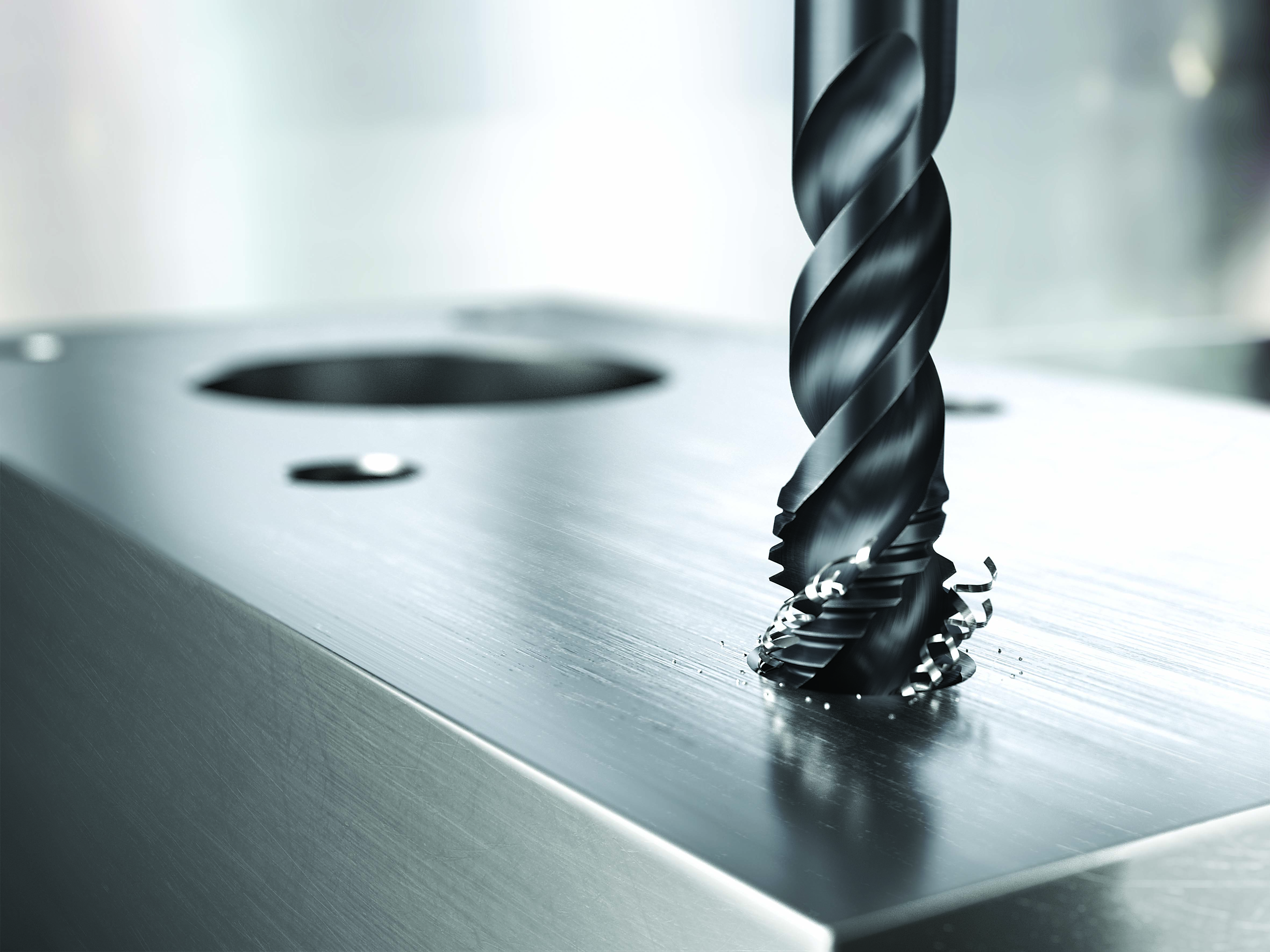
For blind holes, optimized spiral flutes like CoroTap® 300 can significantly improve tool life and process security. Image courtesy of Sandvik Coromant
Rule Number One
Get a good tap. You can use almost any kind of tap to thread holes in aluminum, brass, plastics and most soft steels
with little worry of the tap breaking. That’s not the case with stainless steels or high nickel alloys like those used in aerospace applications. If the material is difficult to mill and drill, then tapping it can create nightmare scenarios. Getting a tap with geometry created for the material being machined is paramount to successful tapping of difficult materials. Having the correct geometry for exotic alloy materials will exponentially improve your chances of success.
Rule Number Two
Drill the correct size hole. Sounds like a no-brainer, right? Find the tap drill size on the chart and drill a hole, then tap it. That works fine — until it doesn’t. I suggest you drill the biggest hole you can get away with and still conform to the engineering requirements. It’s simple, a bigger hole creates less stress on the tap, which reduces risk. I will make the tapped hole as large as I can, even resorting to reaming holes when a drill is not available in the size I want.
Rule Number Three
Drill it deep. Through-holes or holes that go all the way through the material are the least risky when tapping because chips are less of a problem. Blind holes, holes that have a bottom, should be drilled as deep as possible and tapped as shallow as possible. This approach creates the maximum amount of clearance between the bottom of the hole and the end of the tap.
Review the print ads from this magazine to continue
This quick advertiser review unlocks the rest of the article and keeps the full-screen reader focused on the ads instead of the page chrome.
Continue reading
September 2024
Related


 MFGAxis Discussion
Be part of the shop-floor conversation
Like, save, or comment on this CTE story.
MFGAxis Discussion
Be part of the shop-floor conversation
Like, save, or comment on this CTE story.


MFGAxis Discussion